
The Irish Munros represent Ireland’s highest mountain peaks, all standing over 3,000 feet (914 metres) above sea level. These 14 summits, predominantly located in County Kerry’s MacGillycuddy’s Reeks, attract thousands of hillwalkers and mountaineers each year. Pat Falvey Irish & Worldwide Adventures provides guided climbs of the Irish Munros with professional mountain leaders who know these peaks intimately. This guide details each summit, climbing routes, and practical preparation advice for tackling Ireland’s most challenging mountain objectives.
What Are the Irish Munros?
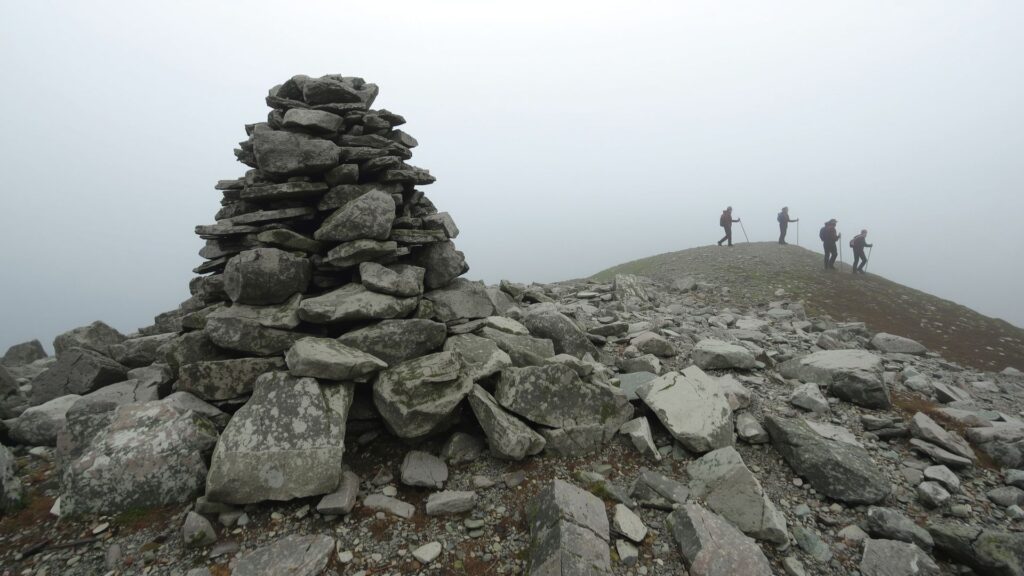
The term “Munro” originates from Sir Hugh Munro, who published the first comprehensive list of Scottish peaks exceeding 3,000 feet in 1891. Mountaineers across Britain and Ireland adopted this classification system, creating separate lists for England, Wales, and Ireland. The Irish Munros consist of 14 peaks that meet the dual criteria of exceeding 3,000 feet in height and having a minimum prominence of 15 metres from the highest connecting saddle.
Joss Lynam, a respected Irish mountaineer, compiled the definitive Irish Munros list, which the Mountaineering Council of Ireland later adopted as the official record. The Irish Munros attract climbers year-round, with each peak offering unique challenges, views, and mountain experiences across Ireland’s highest terrain. MacGillycuddy’s Reeks dominates the list with 11 summits, making it Ireland’s premier high-altitude mountain range.
The Complete List of Irish Munros
The 14 Irish Munros span three distinct mountain ranges across Ireland. Each peak presents different technical challenges, from straightforward hillwalks to exposed scrambles requiring mountaineering skills.
1. Carrauntoohil (1,039 metres / 3,409 feet)
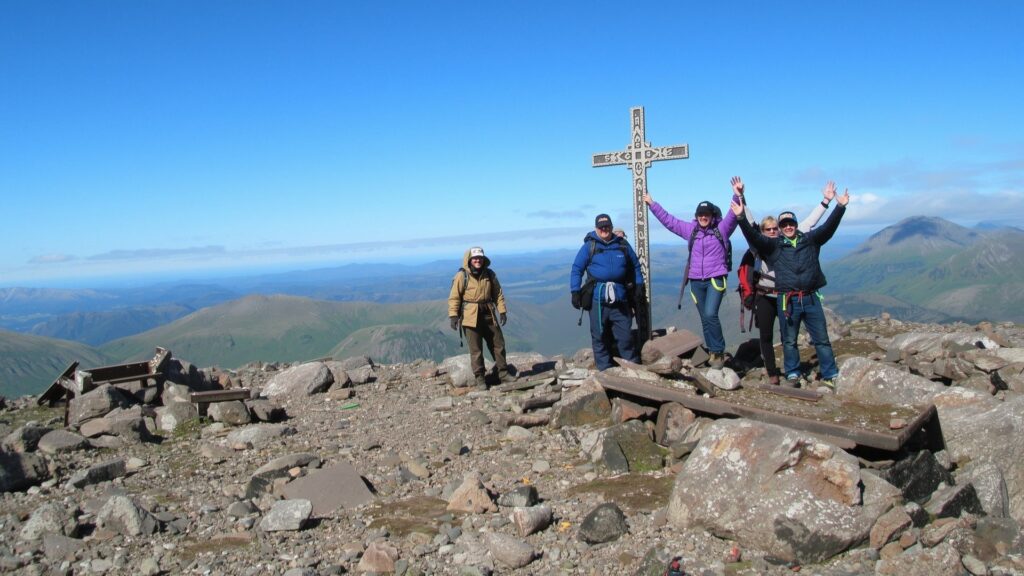
Carrauntoohil stands as Ireland’s highest mountain at 1,039 metres, located in the heart of MacGillycuddy’s Reeks in County Kerry. The summit attracts over 100,000 visitors annually, with three main routes providing access: the Devil’s Ladder, the Brother O’Shea’s Gully, and the Coomloughra Horseshoe. Pat Falvey Irish & Worldwide Adventures offers guided Carrauntoohil hikes throughout the year, with experienced mountain leaders ensuring safe navigation across this challenging terrain. The standard ascent via the Devil’s Ladder takes 4-6 hours depending on fitness levels and weather conditions.
2. Beenkeragh (1,010 metres / 3,314 feet)
Beenkeragh rises to 1,010 metres as Ireland’s second-highest summit, positioned immediately west of Carrauntoohil along the Reeks ridge. The peak features a dramatic profile with steep faces dropping into both Coomloughra and Hag’s Glen. Climbers typically access Beenkeragh as part of the Coomloughra Horseshoe, one of Ireland’s finest ridge walks. The traverse between Carrauntoohil and Beenkeragh crosses Ireland’s most exposed mountain ridge, requiring good scrambling skills and a head for heights.
3. Caher East (1,001 metres / 3,284 feet)
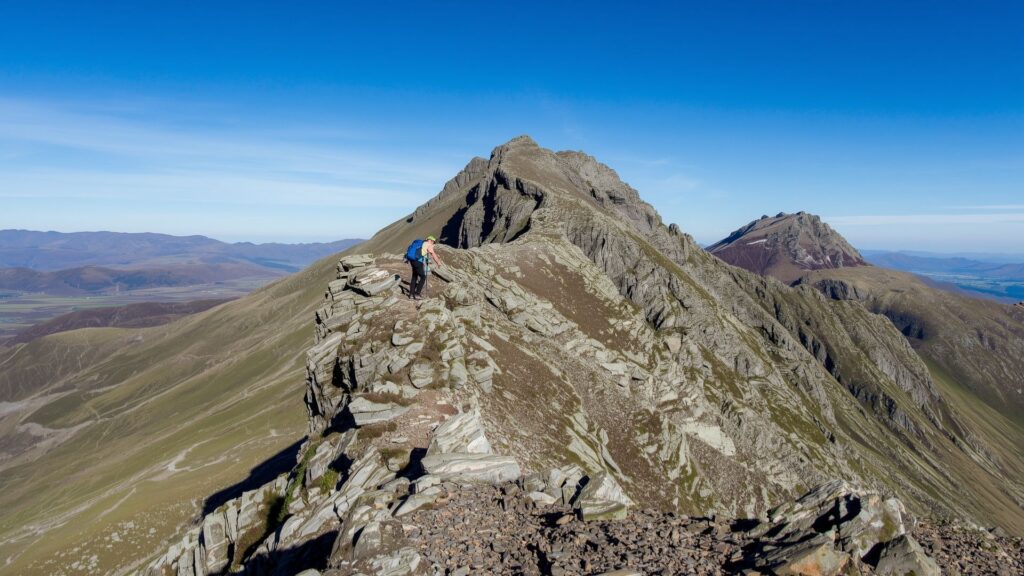
Caher East reaches 1,001 metres, forming the eastern component of the Caher massif in MacGillycuddy’s Reeks. The summit sits directly south of Carrauntoohil, separated by a high col that provides relatively straightforward access. Climbers often include Caher East as part of multi-peak days, combining it with Carrauntoohil and other nearby summits in the central Reeks.
4. Cnoc na Péiste (988 metres / 3,241 feet)
Cnoc na Péiste stands at 988 metres, positioned west of Caher along the main Reeks ridge. The summit translates as “Hill of the Serpent” in English. The peak forms a key link in the complete Reeks traverse, one of Ireland’s most demanding hillwalking challenges that connects all 11 Munros in the range.
5. Caher West (975 metres / 3,199 feet)
Caher West reaches 975 metres, forming the western peak of the Caher massif. The summit sits close to Caher East, separated by a shallow saddle. The peak’s position along the central Reeks ridge makes it a natural inclusion for multi-summit expeditions.
6. Maolán Buí (973 metres / 3,192 feet)
Maolán Buí stands at 973 metres, positioned west along the Reeks ridge between Cnoc na Péiste and the Big Gun. The summit translates as “Yellow Rounded Hill” in English. The peak forms part of the western Reeks, an area that sees fewer visitors than the Carrauntoohil section despite offering equally dramatic mountain scenery.
7. Carrauntoohil Tooth (973 metres / 3,146 feet)
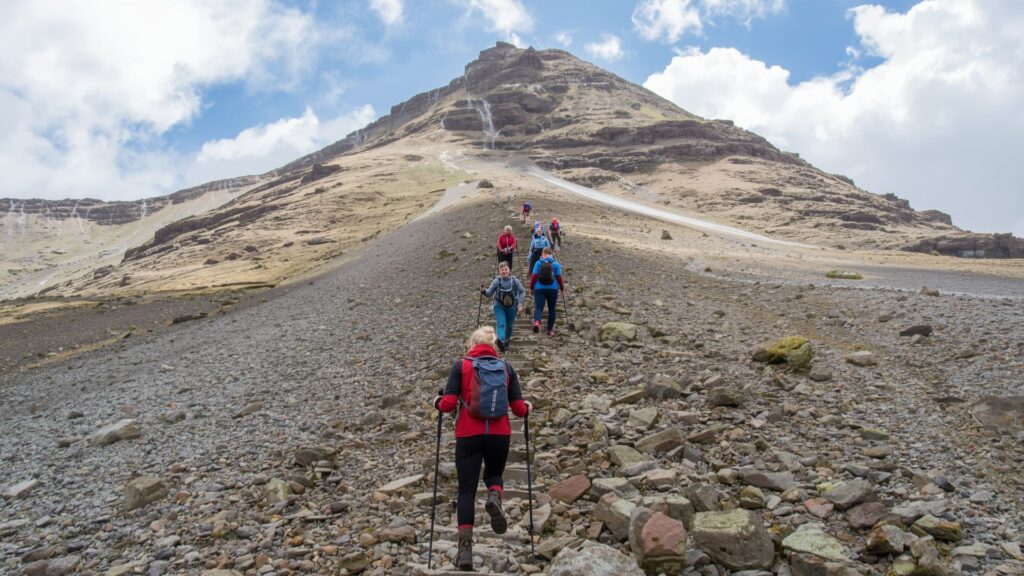
Carrauntoohil Tooth reaches 973 metres, positioned on the ridge between Carrauntoohil and Beenkeragh. The summit features distinctive rock formations that give the peak its name, with pinnacles creating technical scrambling challenges. The Tooth represents one of the Irish Munros’ most demanding objectives, requiring confident scrambling abilities.
8. Cnoc an Chuillin (958 metres / 3,143 feet)
Cnoc an Chuillin stands at 958 metres, located on the western extension of the Reeks ridge. The summit translates as “Hill of the Holly” in English. The peak offers a quieter alternative to the more popular eastern Reeks summits, with fewer climbers venturing this far along the ridge.
9. Brandon (952 metres / 3,123 feet)
Brandon reaches 952 metres as Ireland’s second-highest mountain outside MacGillycuddy’s Reeks, dominating the Dingle Peninsula in County Kerry. The mountain occupies a spectacular position between Dingle Bay and Tralee Bay. Brandon takes its name from Saint Brendan the Navigator, who allegedly climbed the mountain before his legendary Atlantic voyage. Several routes ascend Brandon, with the Pilgrim Path from Faha providing the most historic approach.
10. The Big Gun (939 metres / 3,081 feet)
The Big Gun stands at 939 metres on the western section of the Reeks ridge, positioned between Maolán Buí and Cruach Mhór. The peak features a distinctive pyramidal profile when viewed from certain angles. The summit forms part of the western Reeks traverse, which requires excellent navigation skills and mountain fitness.
11. Cruach Mhór (932 metres / 3,058 feet)
Cruach Mhór reaches 932 metres, forming the westernmost summit in the MacGillycuddy’s Reeks range. The peak stands just above the Irish Munros threshold. The mountain’s remote position means it receives fewer visitors than eastern Reeks summits, despite offering equally spectacular scenery.
12. Loch Coimín Móir (926 metres / 3,038 feet)
Loch Coimín Móir stands at 926 metres, named after the mountain lake visible from the summit. The peak occupies the far western end of the Reeks, positioned beyond Cruach Mhór along the continuing ridge. Access to Loch Coimín Móir requires commitment, with approaches involving long distances across pathless terrain.
13. Lugnaquilla (925 metres / 3,035 feet)
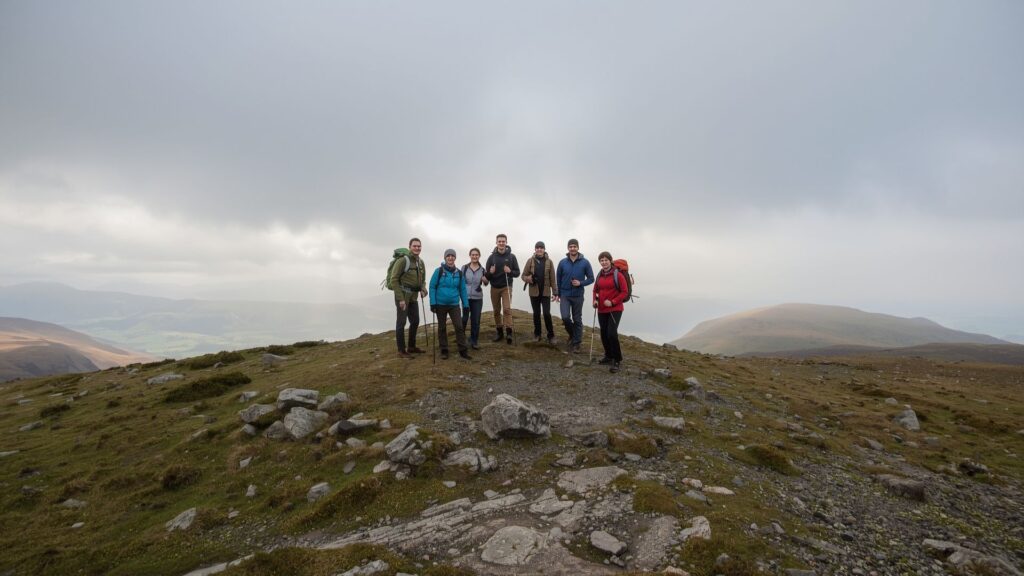
Lugnaquilla reaches 925 metres as Ireland’s highest mountain outside County Kerry, dominating the Wicklow Mountains south of Dublin. The broad, rounded summit contrasts with the sharp ridges of MacGillycuddy’s Reeks. Lugnaquilla attracts thousands of Dublin-based hillwalkers, with multiple approach routes providing access from surrounding valleys. The Irish Munros challenge requires Lugnaquilla as the sole representative from Leinster.
14. Galtymore (919 metres / 3,015 feet)
Galtymore stands at 919 metres as the highest summit in the Galty Mountains, which straddle the Tipperary-Limerick border. The peak represents the southernmost and easternmost of the Irish Munros. Galtymore provides spectacular views across the Golden Vale and north towards the Silvermines and Arra Mountains. Multiple routes ascend Galtymore, with approaches from both north and south offering varied mountain experiences.
Planning Your Irish Munros Challenge
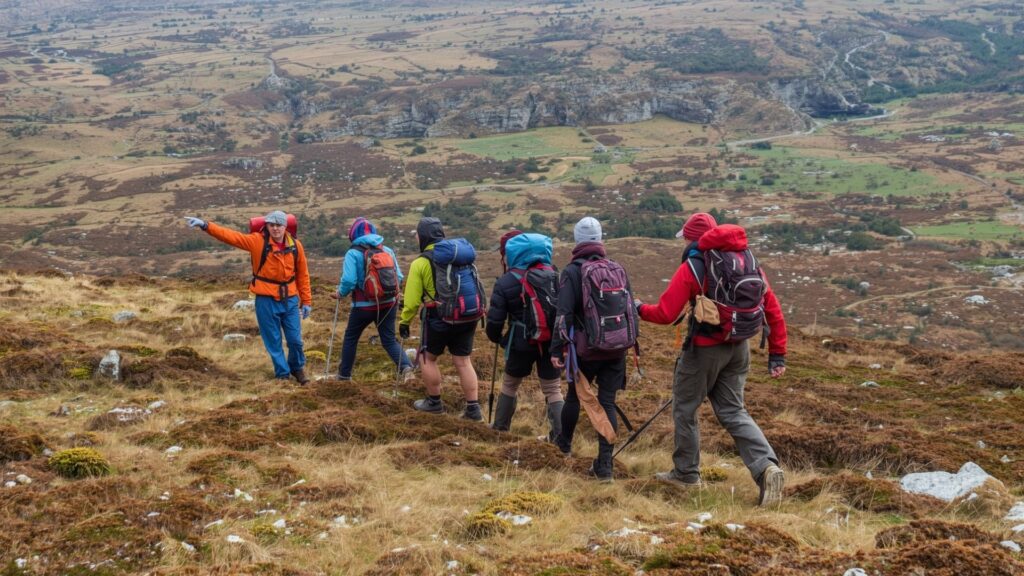
Completing all 14 Irish Munros requires careful planning, appropriate fitness levels, and mountain skills developed through progressive experience. Most climbers tackle the list over multiple trips, focusing on different regions and weather windows. The MacGillycuddy’s Reeks concentration means completing 11 summits within a single mountain range, while the remaining three require separate expeditions to Dingle, Wicklow, and Tipperary.
Pat Falvey Irish & Worldwide Adventures designs multi-day guided expeditions that efficiently link Irish Munros summits, providing accommodation, transport, and expert mountain leadership. The standard approach involves two days in MacGillycuddy’s Reeks covering the main ridge, one day for Brandon, one day for Lugnaquilla, and one day for Galtymore. Weather windows become crucial, as poor visibility and high winds make ridge navigation dangerous on exposed terrain.
Training and Fitness Requirements
The Irish Munros demand good cardiovascular fitness, strong legs, and endurance for sustained mountain days. Carrauntoohil alone requires 4-6 hours of continuous climbing and descending, while full ridge traverses extend to 10-14 hours of demanding hillwalking. Training should focus on building leg strength through hill repeats, developing cardiovascular fitness through long walks, and practising navigation skills on lower mountains.
Most climbers train for 8-12 weeks before attempting their first Irish Munros summit, gradually increasing weekly mileage and elevation gain. Weekend hill days should build from 4-5 hours to 8+ hours, with elevation gains progressing from 600 metres to 1,200+ metres. Pat Falvey’s mountain guides assess fitness levels during initial ascents, providing realistic feedback on readiness for more demanding Irish Munros objectives.
Essential Equipment for the Irish Munros
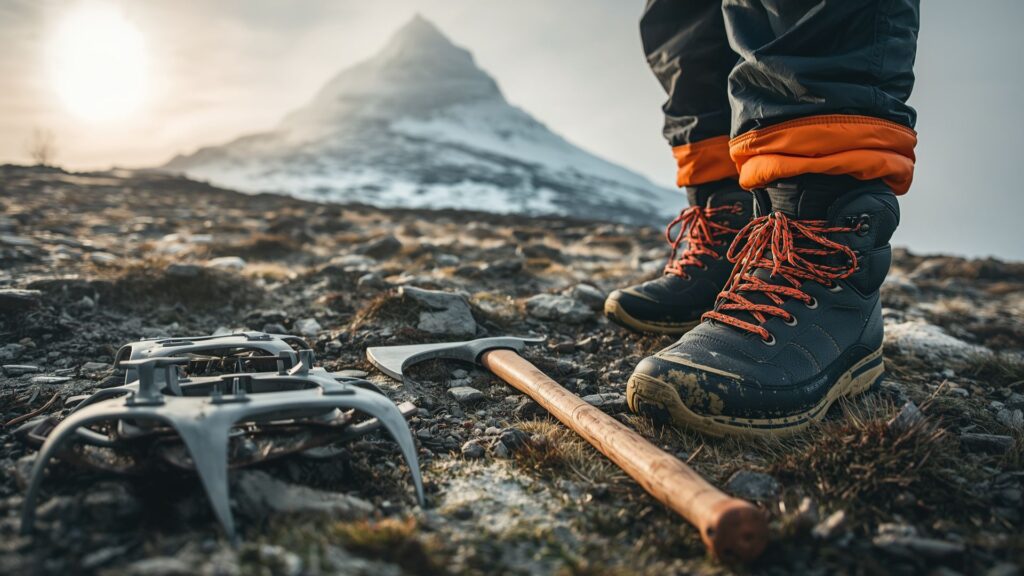
Summer conditions on the Irish Munros require full hill walking kit including waterproof jacket and trousers, warm layers, hat, gloves, boots, map, compass, first aid kit, emergency shelter, head torch, food, and water. Winter additions include crampons, ice axe, winter boots, goggles, and additional warm layers for harsh conditions. Navigation equipment becomes crucial when cloud obscures the summits, with map and compass skills essential for safe descent.
Pat Falvey Irish & Worldwide Adventures provides equipment lists tailored to specific Irish Munros expeditions, accounting for seasonal conditions and route difficulty. The company offers equipment hire for specialist items like crampons and ice axes. Quality equipment makes the difference between enjoyable days and miserable experiences on Ireland’s highest peaks.
Weather and Safety Considerations
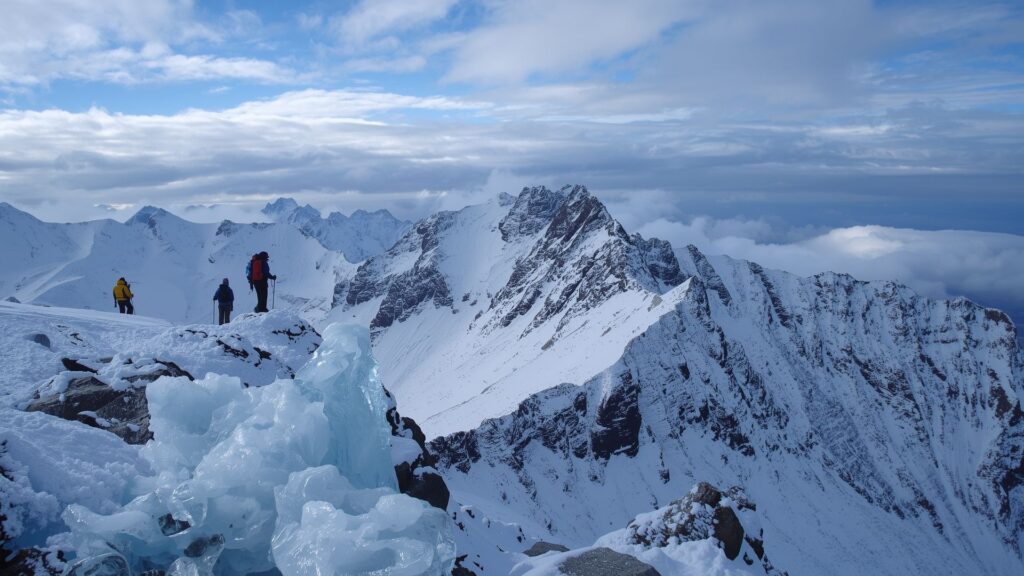
Weather patterns dramatically impact Irish Munros climbing conditions, with Atlantic weather systems bringing rapid changes and severe conditions to exposed summits. The Irish Munros project a full 1,000+ metres above sea level, placing summits firmly in the mountain weather zone. Wind speeds increase with altitude, temperatures drop approximately 1 degree per 100 metres gained, and cloud often obscures peaks while valleys remain clear.
Navigation skills become essential on the Irish Munros, where wrong turns lead to dangerous ground. The Reeks ridge involves multiple changes of direction, with easy errors leading climbers onto steep ground above cliffs. Pat Falvey Irish & Worldwide Adventures maintains a 100% safety record across 30 years of mountain guiding through conservative decision-making and expert local knowledge. The Mountain Lodge in Beaufort provides specialist mountain accommodation, offering convenient access to the Reeks and other Kerry peaks.