
Vision boards are visual tools that display images, words, and affirmations representing personal goals and aspirations. This practical technique helps individuals maintain focus on their objectives through daily visual reinforcement. This guide explains how vision boards work, provides step-by-step creation instructions, and offers proven methods for using them to achieve your goals.
What is a Vision Board?
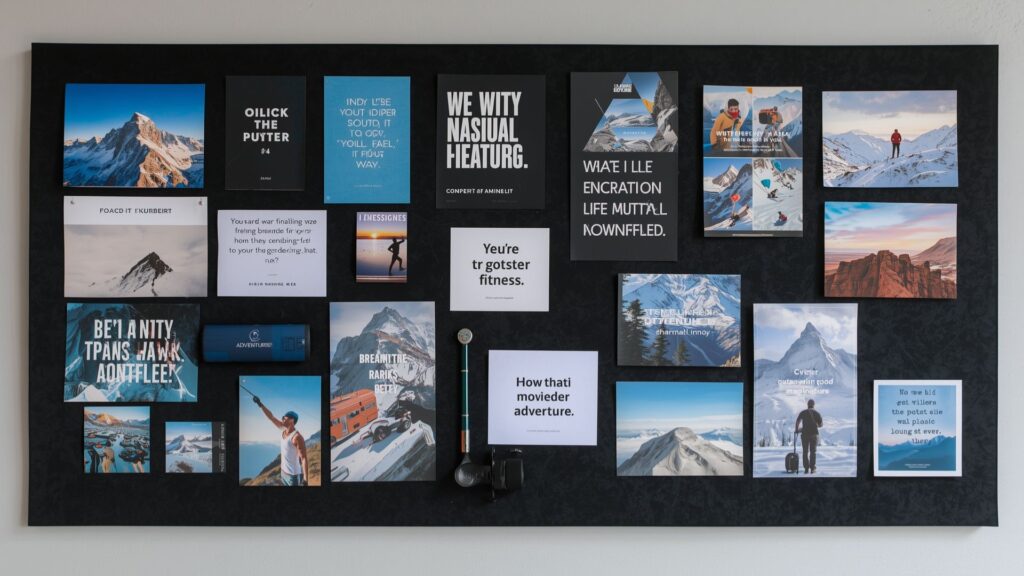
A vision board is a collage of pictures and words that represents a goal, a passion, or a dream. Vision boards serve as powerful visual reminders of what you want to achieve in life, whether that relates to career advancement, personal development, fitness goals, or travel aspirations. The concept centres on the psychological principle that regular visual exposure to your objectives strengthens your commitment and motivation to pursue them.
Pat Falvey Irish & Worldwide Adventures recognises the value of vision boards in preparing for significant expeditions. Many climbers preparing for guided Carrauntoohil hikes or Kilimanjaro expeditions use vision boards to maintain focus during their training programmes. The visual representation of standing at a summit provides powerful motivation during challenging preparation periods.
How Do Vision Boards Work?
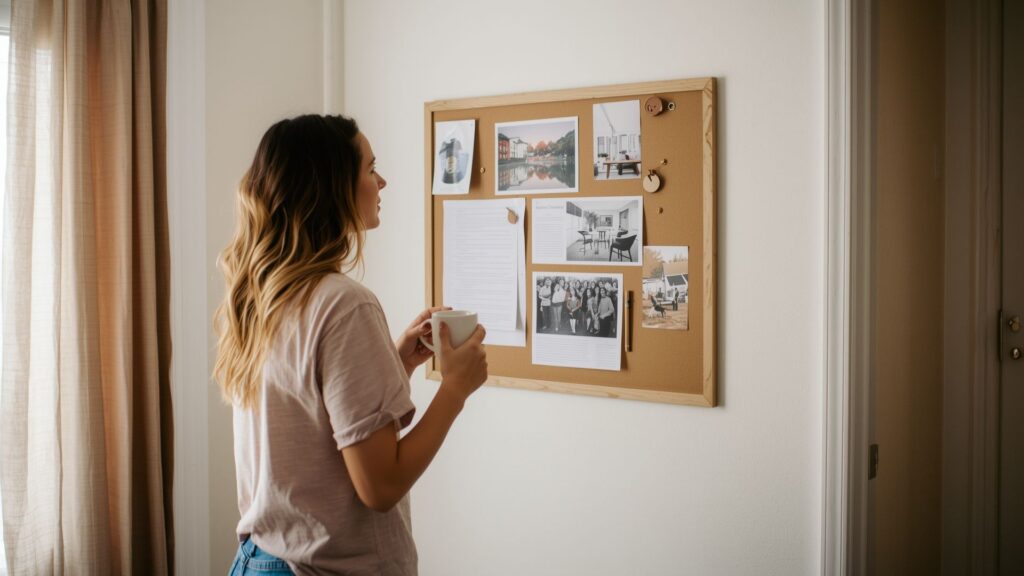
Vision boards work by placing visual representations of your goals into one space so that you can easily visualise them frequently. The practice combines several psychological principles that support goal achievement.
The human brain processes visual information 60,000 times faster than text, making images particularly effective for embedding goals into your subconscious mind. When you view your vision board daily, you activate the reticular activating system in your brain, which filters information and prioritises what matters most to you. This heightened awareness helps you notice opportunities and resources that align with your goals.
Place your vision board somewhere that you will see it every day so that you can visualise where you want to be daily.Common locations include bedroom walls, office spaces, or inside wardrobe doors. The key factor involves regular exposure rather than the specific location. Some people photograph their vision boards and set the image as their phone wallpaper for constant accessibility.
Research in sports psychology demonstrates that athletes who combine physical training with mental visualisation techniques achieve better results than those who rely on physical training alone. This principle applies equally to adventure goals, business objectives, and personal development targets.
How to Create a Vision Board

Creating an effective vision board requires thoughtful preparation and authentic connection to your goals. The process typically takes 2-4 hours, though some people spread the activity across several sessions to allow ideas to develop naturally.
Get all the images that represent your goal or dream. Pinterest and magazines provide good sources of images and quotes. This remains a personal process, so use your gut when picking out images or quotes.
Start by clarifying your specific goal before gathering materials. Write down exactly what you want to achieve, including measurable details. For example, rather than “get fit,” specify “complete a Carrauntoohil climb by September 2026.” This clarity guides your image selection and creates focus.
If an image gives a feeling that inspires you, include it, but try to keep selections in line with your goal to focus your mind and your internal visualisation. Choose images that evoke strong emotional responses. A picture of a mountain summit might represent achievement, whilst an image of a sunrise could symbolise new beginnings. Select between 15-25 images to avoid overwhelming your board whilst maintaining visual interest.
You can be as creative as you want. Some people like to put a picture of themselves in the centre. This personalisation technique, called “future self-visualisation,” helps your brain recognise the goal as personally relevant rather than abstract. Consider using a photograph from a previous achievement to remind yourself of your capability.
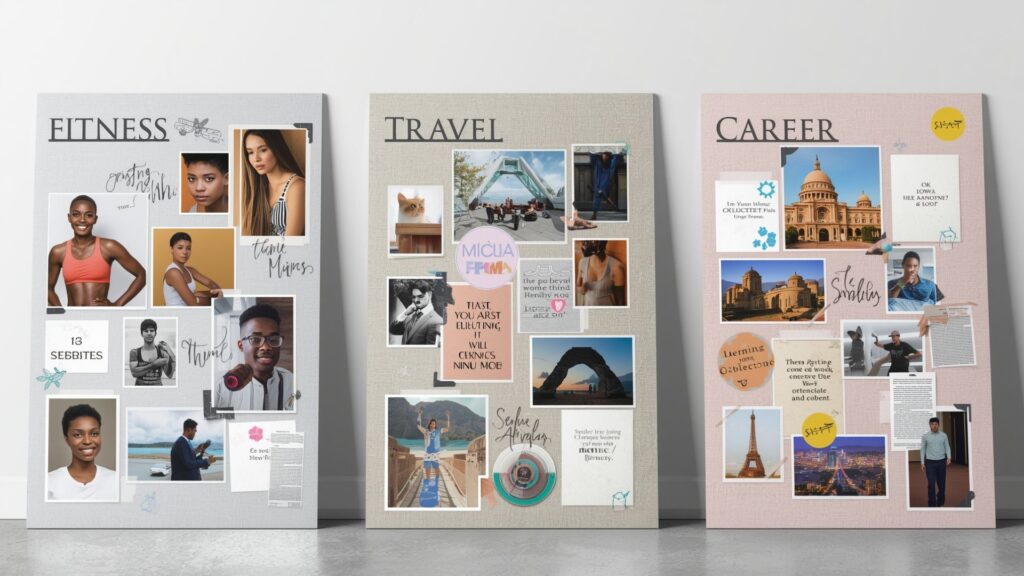
Have one vision board for each goal. Attempting to combine multiple unrelated goals on a single board dilutes focus and weakens the visualisation effect. If you pursue several objectives simultaneously, create separate boards for each and rotate your primary focus quarterly.
Keep the vision board organised and clean, as a messy board may affect your visualisation. Use a structured layout with your central goal in the middle and supporting elements arranged around it. Some people prefer geometric arrangements, whilst others choose organic, flowing designs. Select whatever pattern resonates with your personal aesthetic preferences.
Materials needed
- Cork board, poster board, or canvas (50cm x 70cm provides adequate space)
- Scissors and adhesive (glue stick or pins)
- Magazines, printed images, or photographs
- Markers or pens for adding text
- Decorative elements like ribbons or stickers (optional)
How to Use a Vision Board
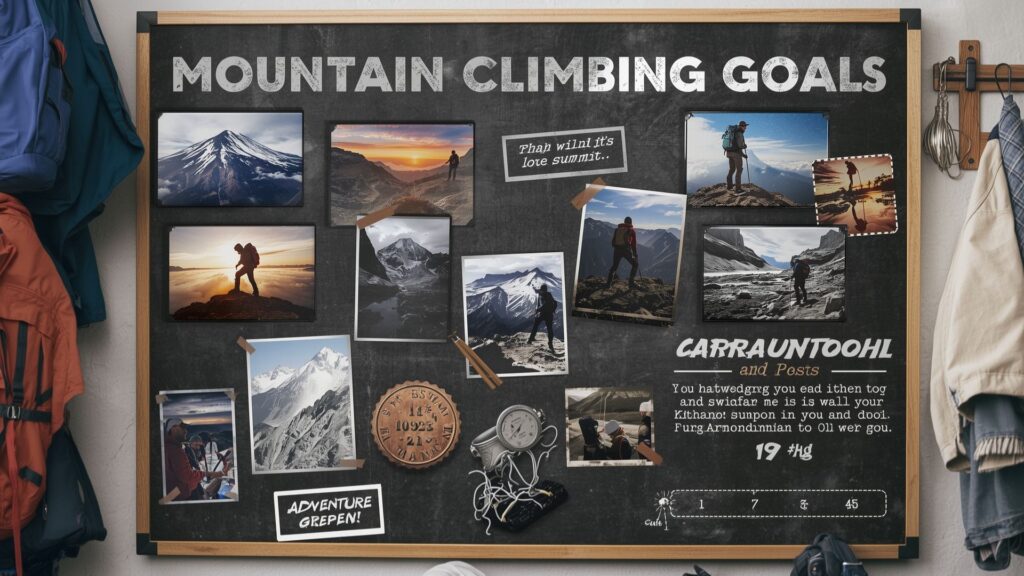
Look at your vision board often and feel the inspiration it provides. Establish a specific daily routine for engaging with your board. Many people spend 5-10 minutes each morning reviewing their vision board before starting their day, whilst others prefer evening sessions before sleep.
Read your affirmations and inspirational words aloud. Speaking goals aloud activates additional neural pathways and strengthens commitment. Research shows that verbalising intentions increases follow-through by approximately 42% compared to silent review.
See and feel yourself living in that manner. Close your eyes after viewing your board and mentally rehearse achieving your goal. If your vision board features an Everest Base Camp trek, imagine the sound of your boots on the trail, the crisp mountain air, and the satisfaction of reaching your destination.
Believe it is already yours. Adopt a mindset of inevitable success rather than wishful thinking. This shift from “I hope this happens” to “I am working towards this reality” changes your behaviour and decision-making patterns.
Acknowledge goals you have already achieved along the way. Celebrate small victories by adding markers or stickers to your board when you complete milestones. This positive reinforcement maintains motivation during long-term pursuits.
Vision boards work best when combined with concrete action plans. After your visualisation session, identify one specific action you can take that day. This might involve researching training programmes for Kilimanjaro, booking a fitness assessment, or contacting expedition organisers.
The Science Behind Vision Boards
Visualisation represents one of the most powerful mind exercises you can practise. When performed properly, you need to see, hear, and feel everything that you want from your visualisation.
Neuroscience research reveals that the brain struggles to distinguish between vividly imagined experiences and actual events. Brain scans show that visualising an activity activates the same neural regions as physically performing that activity. This phenomenon explains why mental rehearsal improves performance across various domains, from athletics to public speaking.
The process engages your reticular activating system, which acts as a filter for the approximately 11 million pieces of information your brain processes each second. By regularly viewing your vision board, you programme this system to prioritise information relevant to your goals. You begin noticing opportunities, resources, and connections that previously escaped your attention.
However, vision boards alone do not guarantee success. They function as motivational tools that must accompany deliberate action. Think of your vision board as a compass that provides direction whilst you supply the movement. Many adventure enthusiasts preparing for expeditions with Pat Falvey Irish & Worldwide Adventures use vision boards alongside structured training schedules, gear preparation, and skill development.
Vision Board Tips for Adventure Goals

Adventure and mountaineering goals particularly benefit from vision board techniques because they involve long preparation periods and require sustained motivation through challenging training phases.
When creating a vision board for an expedition like Annapurna Base Camp or Mount Toubkal, include images that represent both the destination and the journey. Feature photographs of the actual mountain, but also include images representing fitness, determination, teamwork, and personal growth. These elements remind you that the expedition offers value beyond reaching the summit.
Add specific milestone images to track your progress. For a Camino de Santiago preparation, you might include targets for distance walked, weight carried, or consecutive hiking days completed. Physical representations of progress provide tangible evidence of advancement when motivation wanes.
Consider including images from The Mountain Lodge or other base locations where you will train or prepare. These familiar reference points ground your vision in reality and help your brain accept the goal as achievable rather than fantasy.
Many climbers include quotes from mountaineering literature or expedition accounts that resonate with their personal values. Select words that address your specific concerns or fears about the challenge ahead. If altitude worries you, choose quotes about acclimatisation success. If you question your capability, select words that emphasise preparation over natural talent.
Maintaining Your Vision Board
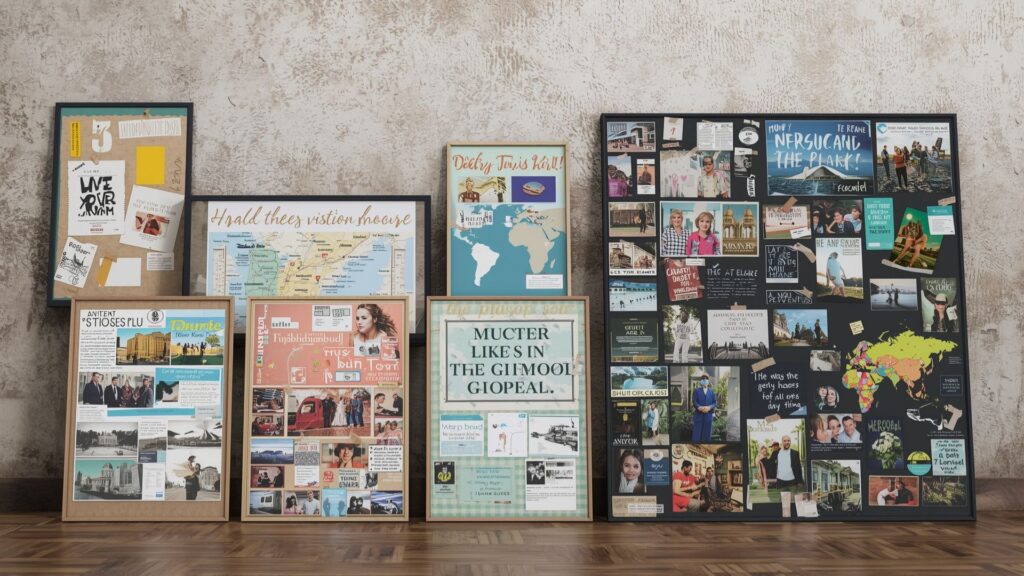
Vision boards require periodic maintenance to remain effective tools rather than forgotten decorations gathering dust.
Review your board monthly to assess whether the images still inspire you. As you progress towards your goal, certain images may lose relevance whilst others gain importance. Feel free to adjust your board by adding new elements or removing outdated ones. This evolution reflects your growing understanding of what the goal truly means to you.
Update your board when you achieve significant milestones. Add photographs of yourself completing preparatory challenges, finishing training sessions, or acquiring necessary equipment. These personal images strengthen your confidence by providing visual proof of your progress.
Don’t forget to keep your vision board after you have achieved your goal as a reminder of what you have accomplished. Many people create “achievement archives” displaying vision boards from completed goals. These collections serve multiple purposes: they provide inspiration during difficult periods by reminding you of past successes, they demonstrate your ability to set and accomplish meaningful objectives, and they offer tangible evidence of personal growth over time.
Some individuals photograph their vision boards before disassembling them and store these images in digital albums. This approach allows you to maintain the motivational benefit whilst freeing physical space for your next vision board.
Common Vision Board Mistakes to Avoid
Creating vision boards appears simple, but several common errors reduce their effectiveness.
The first mistake involves selecting goals that belong to others rather than yourself. Your vision board must represent what you genuinely want, not what family, friends, or society expects from you. An honest connection to your goal provides the emotional fuel needed for long-term commitment.
Another frequent error involves creating boards that focus exclusively on end results whilst ignoring the process. Successful vision boards balance destination imagery with representations of the journey. If your goal involves summiting Kilimanjaro, include images of training, preparation, and the character qualities you will develop through the process.
Some people create beautiful vision boards but never develop action plans to support them. Vision boards inspire action but cannot replace it. After spending time with your board, always identify concrete steps you can take immediately towards your goal.
Finally, many individuals abandon their vision boards after initial enthusiasm fades. Consistency matters more than intensity. Brief daily engagement produces better results than occasional extended sessions. Even 60 seconds spent genuinely connecting with your vision board provides value.
Combining Vision Boards with Action Planning
The most effective goal pursuit strategies combine visualisation with systematic action planning.
After creating your vision board, develop a detailed action plan that breaks your goal into manageable steps. For expedition preparation, this might involve creating training schedules, researching equipment requirements, arranging time off work, and booking flights. Write these action items separately from your vision board to maintain its inspirational rather than administrative function.
Consider working with experienced guides who understand the practical requirements of your goal. Pat Falvey Irish & Worldwide Adventures has guided over 2,000 people to various summits across 30 years of operation. This expertise helps transform vision board aspirations into achievable expedition plans.
Schedule regular review sessions where you assess progress against your action plan whilst connecting emotionally with your vision board. This combination engages both logical planning capabilities and emotional motivation systems, creating comprehensive support for goal achievement.
For those interested in speaker programmes or corporate events focused on goal achievement and mountaineering metaphors, Pat Falvey offers motivational speaking services that explore these themes in depth.