
Calculating hiking time requires understanding distance, pace, elevation gain, and terrain factors. Pat Falvey Irish & Worldwide Adventures has guided thousands of hikers across Ireland’s mountains using proven time estimation methods. This guide provides the formulas and practical knowledge you need to plan safe, enjoyable hikes.
Many hiking trails list mileage without estimated completion times, leaving hikers to guess or risk being caught out after sunset. Understanding how to calculate hiking time is essential for safe mountain adventures, whether you’re planning a guided Carrauntoohil hike or exploring Kerry’s other peaks. Accurate time estimation ensures you carry sufficient supplies, avoid darkness on exposed ridges, and communicate realistic return times to others. Pat Falvey Irish & Worldwide Adventures has refined these calculations over 30 years of leading expeditions across Ireland’s mountains, from day hikes to multi-day treks like the Camino de Santiago.
The ability to estimate hiking time transforms mountain safety. Weather conditions change rapidly in Irish mountains, where visibility can drop from kilometres to metres within minutes. Knowing your hiking time allows you to make informed decisions about turnaround points, emergency shelter needs, and route selection. This skill applies whether you’re tackling Ireland’s highest peak at 1,038 metres or training for international expeditions like Kilimanjaro.
Understanding Base Walking Speed
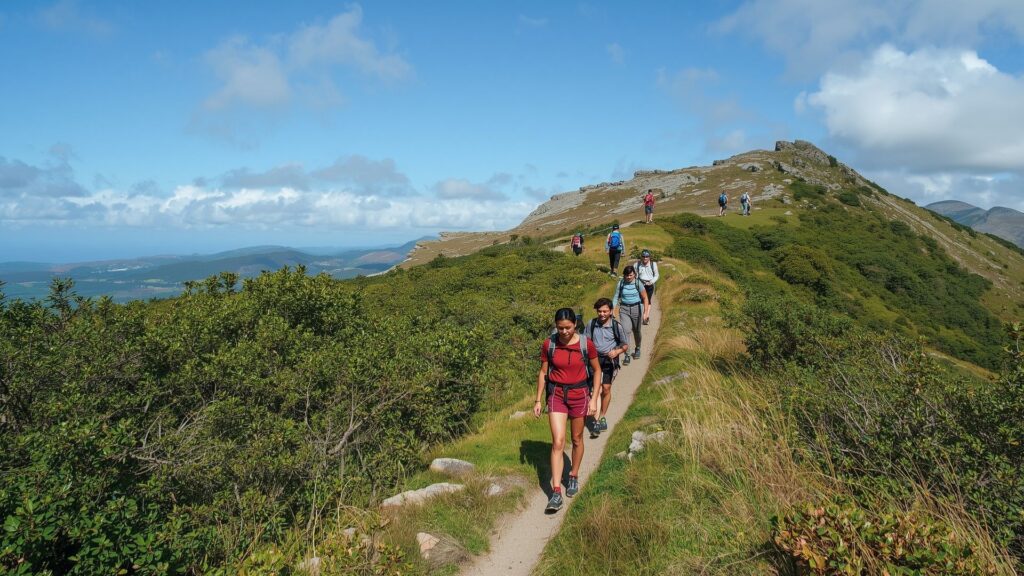
Your base walking speed forms the foundation of all hiking time calculations.
The average hiker maintains 2 miles per hour on moderate terrain, accounting for uneven ground, rest stops, and the slower pace natural to mountain environments. Experienced hill walkers achieve 3 miles per hour on well-maintained paths, whilst beginners often travel closer to 1.5 miles per hour whilst adapting to mountain conditions. These speeds differ significantly from flat-ground walking, where most people comfortably walk 3 to 4 miles per hour on pavements or level trails.
Terrain type dramatically affects your base speed. Rocky paths with loose stones reduce pace by 25 to 30 percent compared to smooth trails. Boggy ground common in Irish uplands slows progress further, particularly after rainfall when peat becomes waterlogged and boots sink with each step. Personal fitness level determines your sustainable speed over distance. A fit walker maintains consistent pace for six to eight hours, whilst less conditioned hikers experience significant speed reduction after three to four hours as fatigue accumulates.
How to Calculate Basic Hiking Time
Distance divided by speed provides your foundation hiking time calculation.
Calculate your route distance first, either from trail guides, mapping applications, or guidebook descriptions. A 10-mile hike at 2 miles per hour requires 5 hours before any adjustments. This basic formula gives you the starting point for more refined estimates. Digital mapping tools provide accurate distance measurements, though they sometimes underestimate actual trail length. Switchbacks, route variations, and paths that weave between obstacles add distance not always visible on maps.
Weather conditions modify your base calculation significantly. Strong winds reduce walking speed by 15 to 25 percent on exposed ridges, whilst heavy rain adds time through reduced visibility and careful footing requirements. The changeable Irish climate means you should calculate hiking time for both fair weather and deteriorating conditions.
Adding Time for Elevation Gain
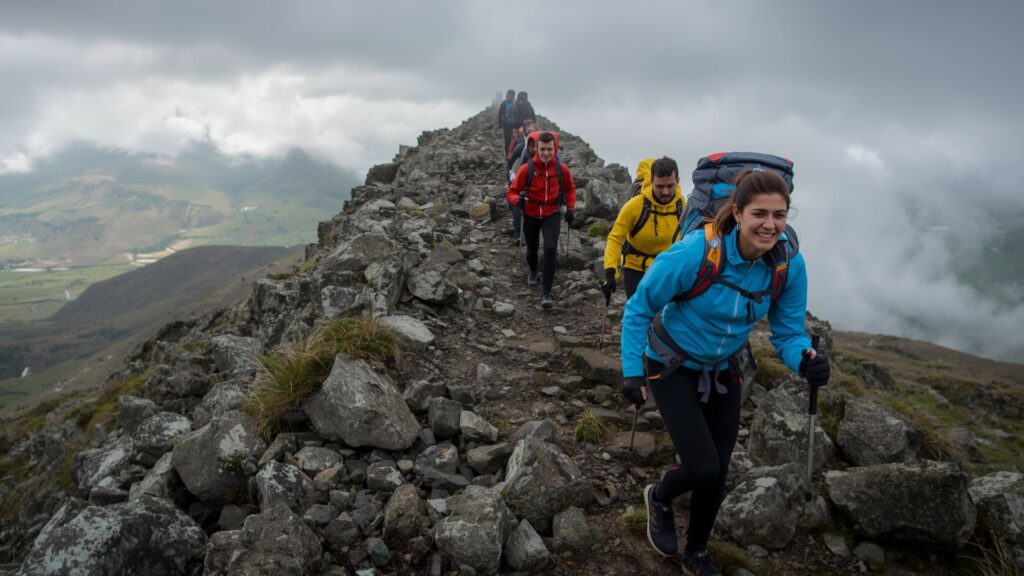
Elevation gain requires specific time additions beyond flat-distance calculations.
Add 30 minutes for every 1,000 feet (305 metres) of elevation gained during your hike. This formula accounts for the cardiovascular demand and slower pace natural to uphill movement. A hike gaining 2,000 feet requires an additional 60 minutes beyond the flat-distance time. Carrauntoohil’s 1,038-metre elevation from valley floor translates to approximately 100 minutes of extra time purely from climbing.
This elevation formula applies to cumulative gain throughout your route, not just the difference between start and end points. A ridge walk that climbs, descends, and climbs again three times requires time additions for each ascent section. Steep versus gradual ascents affect your pace differently despite equal elevation gain. A path gaining 300 metres over 1 kilometre demands different effort than the same gain spread across 3 kilometres. The Devil’s Ladder route on Carrauntoohil exemplifies concentrated elevation gain requiring careful time estimation.
Accounting for Descent Time
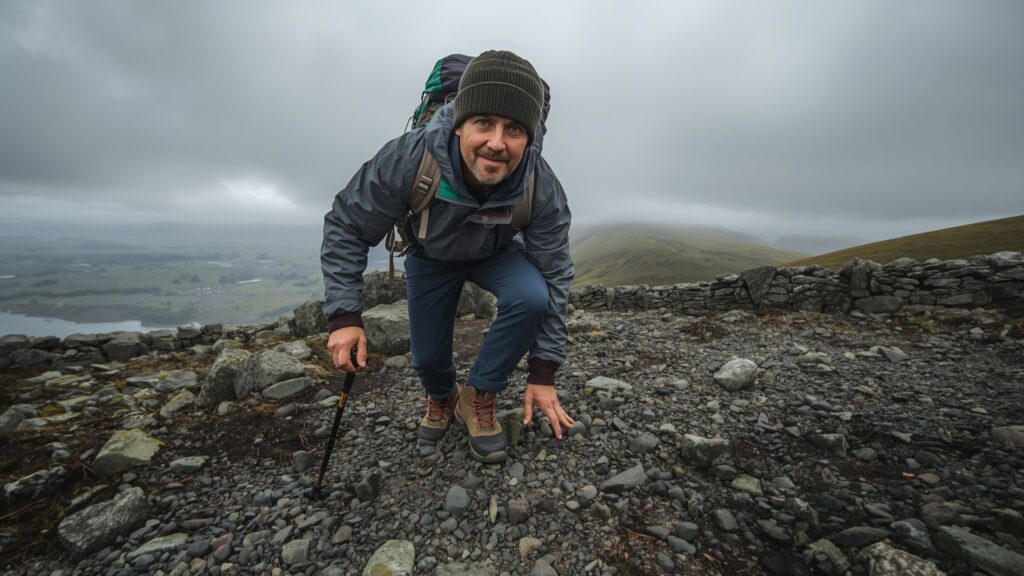
Descending mountains requires more time than many hikers anticipate.
Downhill sections demand controlled movement to protect knees and maintain balance on loose surfaces. You gain no significant time savings going downhill compared to flat walking despite the reduced cardiovascular demand. Steep descents often take longer than equivalent flat distances as you brake each step to prevent falls. Individuals with knee problems consistently report slower downhill progress than ascents, contrary to what seems intuitive.
Rocky descents require placing each foot deliberately, testing footholds, and maintaining three points of contact on steep sections. This cautious approach prevents twisted ankles and knee injuries that end hiking days prematurely. Irish mountain descents become particularly treacherous when wet, with smooth rock surfaces turning slippery and grass concealing loose stones underneath. The Zig Zag route on Carrauntoohil provides gentler descent angles than the Devil’s Ladder, trading distance for reduced technical difficulty.
Incorporating Rest and Photography Stops
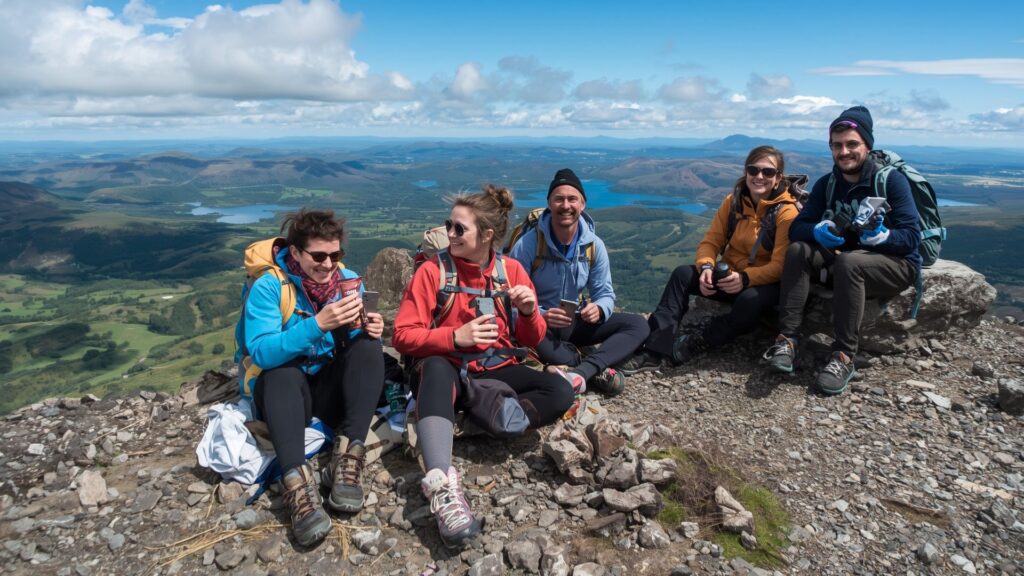
Scenic stops and rest breaks add substantial time to your hiking time estimate.
Add 5 minutes for every viewpoint, summit photo opportunity, or notable landmark you expect to visit. A route with 8 significant scenic spots requires 40 additional minutes beyond movement time. Underestimating stopping time ranks among the most common calculation errors, particularly on first visits to popular peaks where every vista tempts a photograph.
Rest breaks every 45 to 60 minutes help maintain pace and prevent exhaustion-related injuries. These breaks typically last 5 to 10 minutes for removing layers, drinking water, and eating snacks. A 6-hour moving-time hike requires 6 to 8 rest stops, adding 30 to 80 minutes depending on break length and group size. Summit time deserves specific allocation in your calculations. Most hikers spend 15 to 30 minutes at major peaks, taking photos, eating lunch, and enjoying accomplishment.
Adjusting for Pack Weight and Group Size

The weight you carry and people you hike with directly impact your hiking time.
A day pack weighing 5 to 8 kilograms allows standard pace calculations, whilst heavier loads reduce speed proportionally. Overnight packs of 12 to 15 kilograms slow most hikers by 15 to 20 percent compared to day hiking. Pat Falvey’s Annapurna Base Camp treks use porters to carry main equipment, allowing clients to maintain better pace with lighter day packs.
Solo hikers set their own pace without stops for others, making time estimates most predictable. Groups of 2 to 4 people travel nearly as efficiently if fitness levels match closely. Larger groups of 6 to 12 members require 20 to 30 percent additional time for coordinating breaks, regrouping on trails, and accommodating varying fitness levels. The slowest group member determines overall hiking time regardless of others’ capabilities.
Using Established Hiking Time Formulas
Several standardised formulas help calculate hiking time with proven accuracy.
Naismith’s Rule provides the foundation formula used by mountain professionals worldwide. Calculate one hour for every 5 kilometres of horizontal distance, then add one hour for every 600 metres of ascent. This Scottish formula developed in 1892 remains remarkably accurate for fit walkers on good paths. A 10-kilometre hike gaining 900 metres requires 2 hours for distance plus 1.5 hours for ascent, totalling 3.5 hours before adjustments.
The Munros Tables use a simplified version adding one hour per 1,000 feet of ascent to flat-distance time, which proves sufficient for most recreational hiking calculations. Modern smartphone applications like OS Maps and Komoot calculate hiking time automatically using your route, elevation profile, and selected pace. These tools apply established formulas whilst allowing personalisation for fitness level and typical speed.
Seasonal and Weather Factors
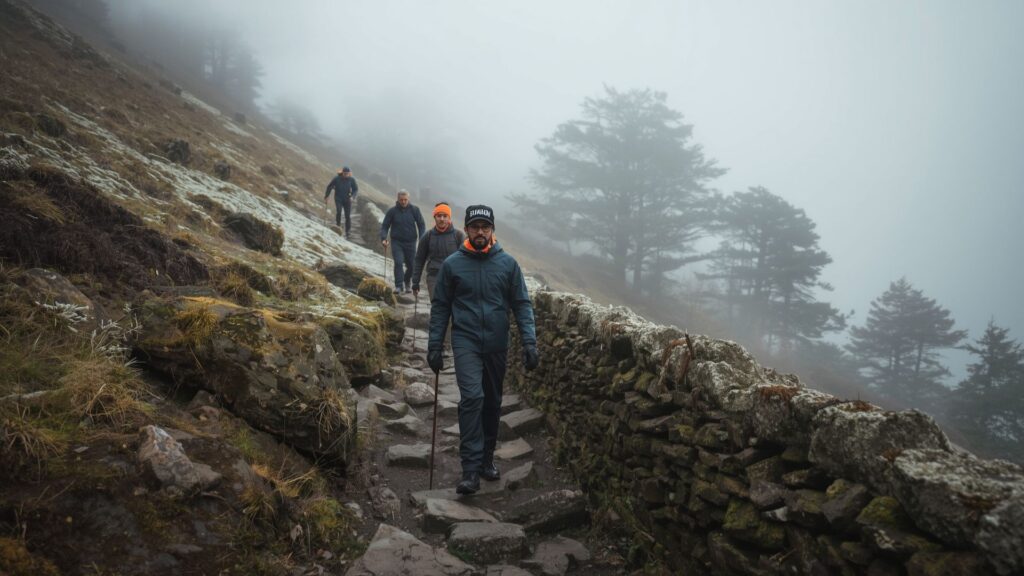
Irish weather conditions dramatically affect hiking time throughout the year.
Winter hiking requires 30 to 40 percent more time than summer for equivalent routes due to shorter daylight, slower movement in potential ice, and additional time donning crampons or navigating snow. Daylight availability becomes the limiting factor, with December offering just 7 hours of usable light compared to June’s 16 hours.
Mist and low cloud reduce visibility to 20 metres or less on Irish peaks, slowing navigation and pace significantly. Hikers spend 50 percent more time on familiar routes when cloud descends. Rain affects hiking time through reduced grip on rocks, streams swelling to obstacles, and energy spent maintaining body temperature. Plan conservatively for winter hiking time to ensure daylight return. Pat Falvey’s Mountain Lodge provides terrain familiarisation training that helps hikers understand how conditions affect pace.
FAQs
Beginners should use 1.5 miles per hour as base speed, then add 30 minutes per 1,000 feet of elevation gain. Add 20 percent to the total for extra rest stops and unfamiliarity with terrain.
The standard formula uses Naismith’s Rule: one hour per 5 kilometres of distance plus one hour per 600 metres of ascent. Adjust for fitness level, terrain difficulty, and weather conditions.
Add 30 minutes for every 1,000 feet (305 metres) of cumulative elevation gain. Steep sections may require additional time adjustments beyond this standard calculation.
Hiking downhill provides minimal time savings and often requires more time on steep descents. Budget equal time for descent as for equivalent flat distance when calculating hiking time.
Weather requires 20 to 40 percent additional time depending on severity. Strong winds add 15 to 25 percent, whilst rain, mist, or winter conditions may require 30 to 40 percent more time.