
Walking properly delivers benefits that extend far beyond basic transportation. Over 145 million adults include walking as a critical part of their active lifestyle across Ireland, the UK, and worldwide. Despite these impressive participation numbers, many walkers use incorrect form that limits the health benefits they receive from their time investment.
Walking properly helps you capitalise on every minute spent moving. The activity provides exceptional cardiovascular benefits whilst simultaneously strengthening your musculoskeletal system. Poor walking form reduces these benefits and increases your risk of developing chronic pain patterns. Pat Falvey Irish & Worldwide Adventures teaches proper walking technique across all guided hikes in Kerry, from Carrauntoohil climbs to coastal trails.
Correct walking posture builds strength in weak muscles whilst stretching overly tight ones. This balanced approach prevents the muscular imbalances that lead to pain and injury. Walking properly creates a foundation for more demanding activities like mountain hiking and trekking expeditions.
Understanding How Posture Affects Your Walking
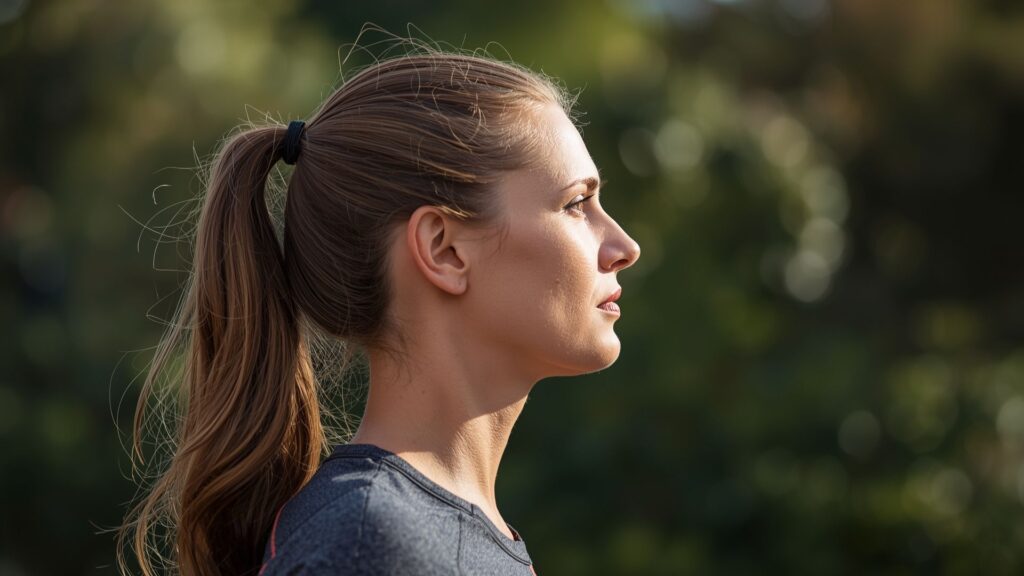
Your posture whilst walking determines how efficiently your body moves and how much strain you place on your joints and muscles. Walking properly requires maintaining proper alignment from your head through your spine to your feet. This alignment allows your body to distribute forces evenly across your skeletal system.
Poor posture indicates underlying issues rather than laziness. Overly tight muscles pull your body out of alignment, whilst weak core muscles fail to provide adequate support. These imbalances compound over time, leading to chronic discomfort and reduced mobility. Focusing on walking properly addresses these weaknesses systematically.
The immediate benefits of correct posture include reduced back pain, decreased joint stress, and improved breathing efficiency. Long-term benefits encompass better balance, stronger bones, and reduced arthritis risk. Pat Falvey’s mountain guides emphasise proper walking form during all guided Carrauntoohil hikes to help participants build sustainable movement patterns.
Poor posture creates additional strain that manifests as spinal pain, hip discomfort, and knee problems. These issues develop gradually, making them easy to ignore until they become serious. Walking properly prevents these problems before they start, protecting your long-term health and mobility.
Mastering Head and Neck Alignment
Walking properly begins with correct head and neck positioning. Your head weighs approximately 5 kilograms, and improper positioning multiplies this load on your neck and upper back. Keeping your head centred over your torso maintains optimal alignment and reduces strain on cervical discs.
Position your head so your ears align with your shoulders when viewed from the side. Your eyes look forward towards the distant horizon rather than down at the ground. This forward gaze naturally lifts your chest and opens your airways, improving breathing efficiency whilst walking. Avoid bending forward or backwards at the junction where your head meets your neck, as this creates excessive pressure on intervertebral discs.
Staying relaxed remains essential for walking properly. Proper posture differs from standing stiffly upright with rigid muscles. Allow your neck and shoulders to remain soft whilst maintaining alignment. Tension in your upper body restricts movement and reduces the cardiovascular benefits of walking.
When your head slumps forward, the rest of your body compensates by rounding your shoulders and curving your spine. This cascading misalignment places strain on multiple areas simultaneously. Correcting head position first often resolves issues throughout the rest of your body. Participants on Pat Falvey’s guided mountain treks learn these alignment principles whilst navigating challenging terrain in Kerry.
Coordinating Arm and Leg Movement
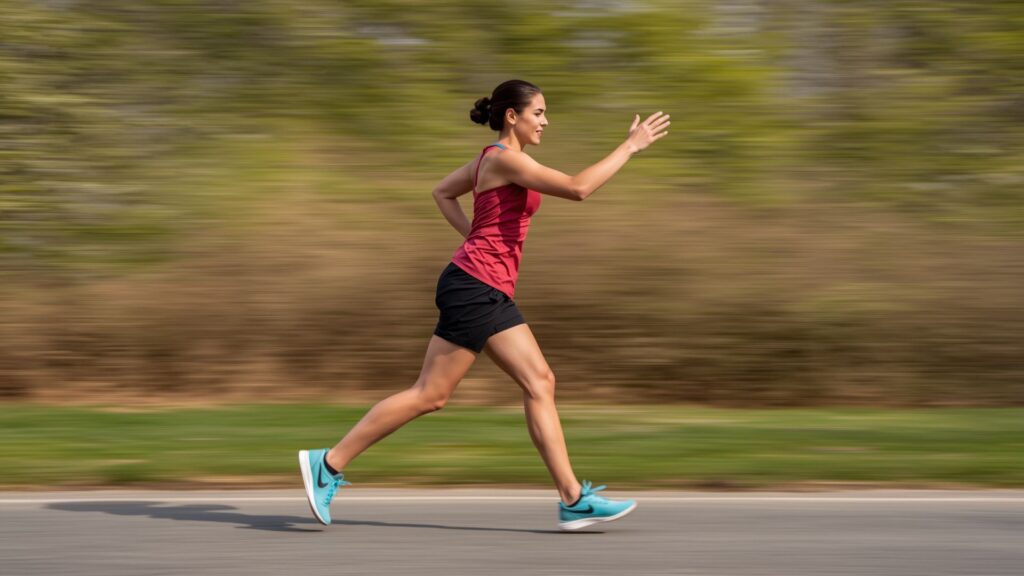
Walking properly requires coordinated movement between your arms and legs. Your arms assist your legs in propelling your body forward through a natural cross-pattern movement. Your left arm swings forward as your right leg strides, and vice versa. This oppositional pattern maintains balance and improves walking efficiency.
Keep your arms relaxed at your sides with your elbows bent between 45 and 60 degrees. Allow your arms to swing naturally from your shoulders rather than holding them rigid. The swinging motion helps drive your forward momentum whilst counterbalancing the rotation created by your leg movement.
Excessive arm swing wastes energy, whilst insufficient arm movement reduces efficiency. Find a natural rhythm that feels comfortable for your walking pace. Your hands should swing forward to approximately chest height and backwards to hip height. Avoid crossing your arms across the centre line of your body, as this creates rotational strain.
The key to walking properly lies in allowing natural flow rather than forcing rigid patterns. Listen to your body’s rhythm and make small adjustments rather than completely changing your natural gait. Pat Falvey’s mountain leaders help hikers find their optimal movement patterns during guided walks through MacGillycuddy’s Reeks.
Optimising Your Stride Length
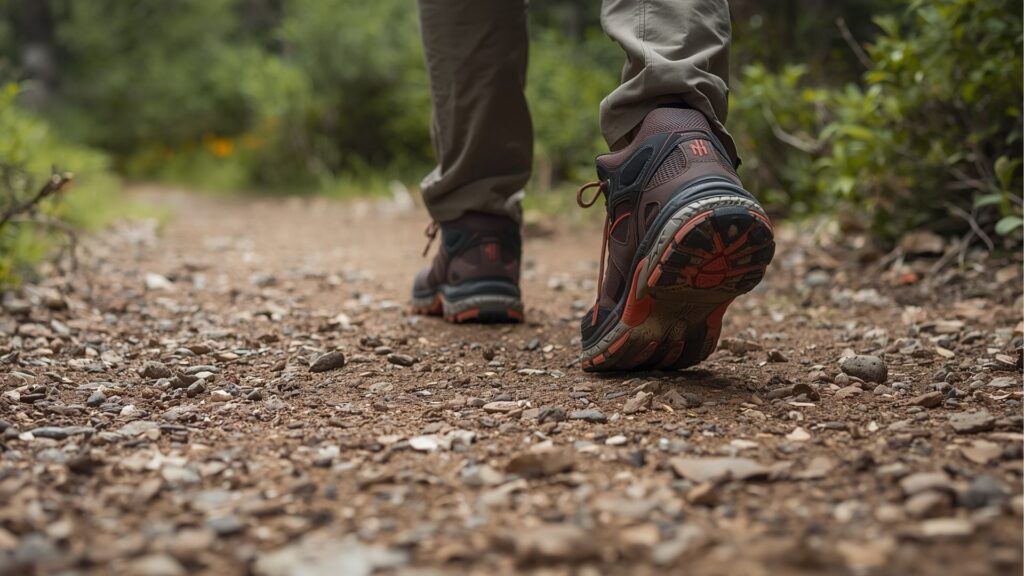
Walking properly includes paying careful attention to stride length. Your stride should feel natural and comfortable rather than stretched or shortened artificially. Excessive stride length increases impact forces on your joints and raises injury risk. Conversely, overly short strides reduce efficiency and may indicate tight hip flexors.
Keep your pelvis facing forward with your hips parallel to each other. This alignment allows your legs to move freely through their full range of motion. Step naturally without reaching forward with your leading leg or pushing off excessively with your trailing leg.
Overstriding occurs when you reach your leading foot too far forward, landing with your heel ahead of your centre of gravity. This pattern increases braking forces and places excessive stress on your knee and hip joints. Shorter, quicker steps reduce impact and improve efficiency, particularly on varied terrain like that found on Carrauntoohil routes.
Terrain influences optimal stride length significantly. Uphill walking requires shorter strides with increased hip flexion, whilst downhill walking benefits from controlled, moderate strides that maintain balance. Pat Falvey Irish & Worldwide Adventures teaches these terrain-specific techniques during guided mountain expeditions across Ireland and internationally.
Understanding the Three-Phase Gait Cycle
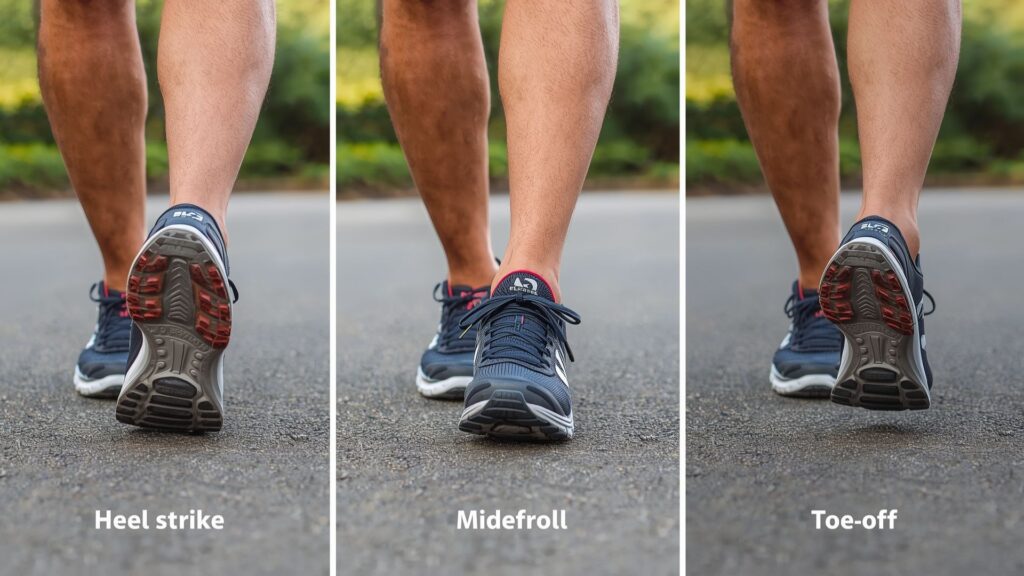
Walking properly requires understanding how your feet interact with the ground through three distinct phases: heel strike, midfoot contact, and toe-off. Each phase plays a critical role in propelling your body forward efficiently whilst minimising joint stress.
The heel strike phase initiates contact with the ground. Your heel touches down first, approximately 30 centimetres ahead of your centre of gravity when walking at a normal pace. This heel-first landing allows your leg to absorb impact forces gradually through your ankle, knee, and hip joints. The slight flexion in your knee at heel strike acts as natural shock absorption.
Following heel strike, your foot rolls smoothly through the midfoot phase. Your weight transfers from your heel through the arch of your foot towards your toes. This rolling motion should occur smoothly without slapping your foot down flat. A proper midfoot roll distributes pressure evenly across your foot, preventing concentrated stress on any single area.
The toe-off phase completes the gait cycle as your foot leaves the ground. Push off primarily through your big toe and the ball of your foot. This push-off generates forward momentum that propels your body into the next step. Strong toe-off requires adequate ankle flexibility and calf strength.
Participants on Pat Falvey’s Kilimanjaro expeditions learn proper gait mechanics before tackling high-altitude terrain. These techniques become particularly important when carrying a pack or walking on uneven surfaces. Practising correct gait patterns on Irish mountains like Carrauntoohil prepares hikers for international expeditions.
Selecting Proper Footwear for Walking
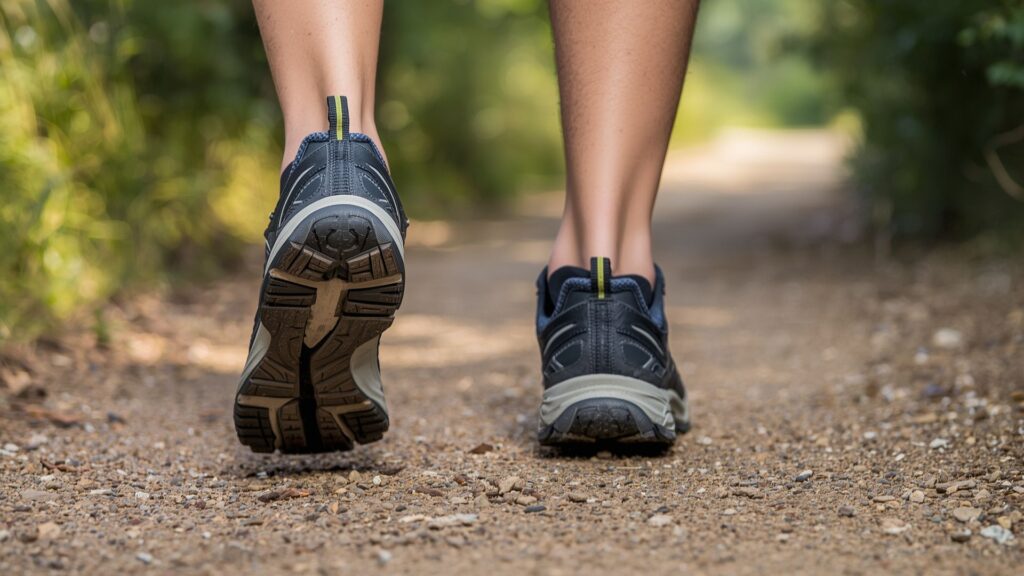
Walking properly requires appropriate footwear that supports natural foot mechanics whilst providing adequate cushioning. Your shoes significantly influence your gait pattern, joint loading, and injury risk. Investing in quality walking shoes delivers substantial returns through improved comfort and reduced injury rates.
Walking shoes should provide adequate arch support matched to your foot type. Overpronators need motion control features that prevent excessive inward foot rolling. Underpronators require neutral cushioning that accommodates their rigid foot structure. Most walkers have neutral pronation and perform best in stability shoes.
Shoe fit matters more than brand or price for walking properly. Your walking shoes should have approximately one centimetre of space between your longest toe and the shoe’s end. This space prevents toe jamming during downhill walking. The heel should fit snugly without slipping, whilst the midfoot provides secure support without excessive tightness.
Replace walking shoes every 500 to 800 kilometres, depending on your weight, walking surface, and shoe construction. Worn shoes lose cushioning effectiveness and allow your foot to move excessively within the shoe. These changes alter your gait pattern and increase injury risk even when the shoes appear visually intact.
Building Core Strength for Better Walking
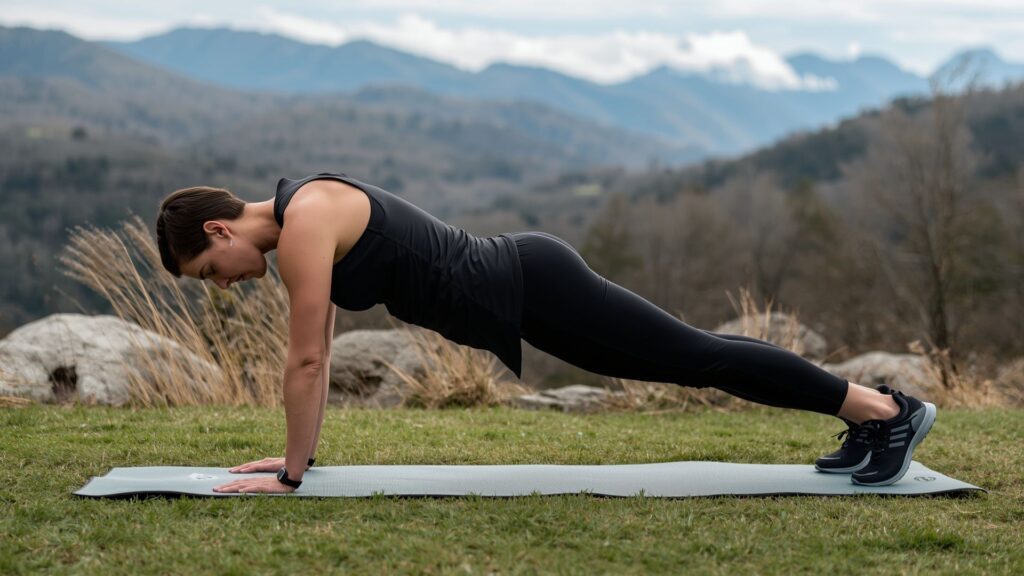
Walking properly depends on adequate core strength to maintain proper posture throughout your walk. Your core muscles stabilise your spine and pelvis, providing a stable platform for your arms and legs to move efficiently. Weak core muscles lead to postural collapse and compensatory movement patterns.
Plank exercises build the isometric strength required for walking properly. Hold a forearm plank position with your body forming a straight line from head to heels. Begin with three sets of 30 seconds and gradually progress to 60-second holds. This exercise strengthens your entire core musculature simultaneously.
Bird dog exercises improve coordination between your core and extremities whilst challenging balance. From hands and knees, extend your right arm and left leg simultaneously whilst maintaining a neutral spine. Hold for 5 seconds, then switch sides. Complete 10 repetitions per side to build core stability.
Participants on Pat Falvey’s Everest Base Camp treks discover the importance of core strength when carrying loaded backpacks at altitude. Building core strength before international expeditions improves performance and reduces fatigue during long trekking days.
Developing a Walking Routine
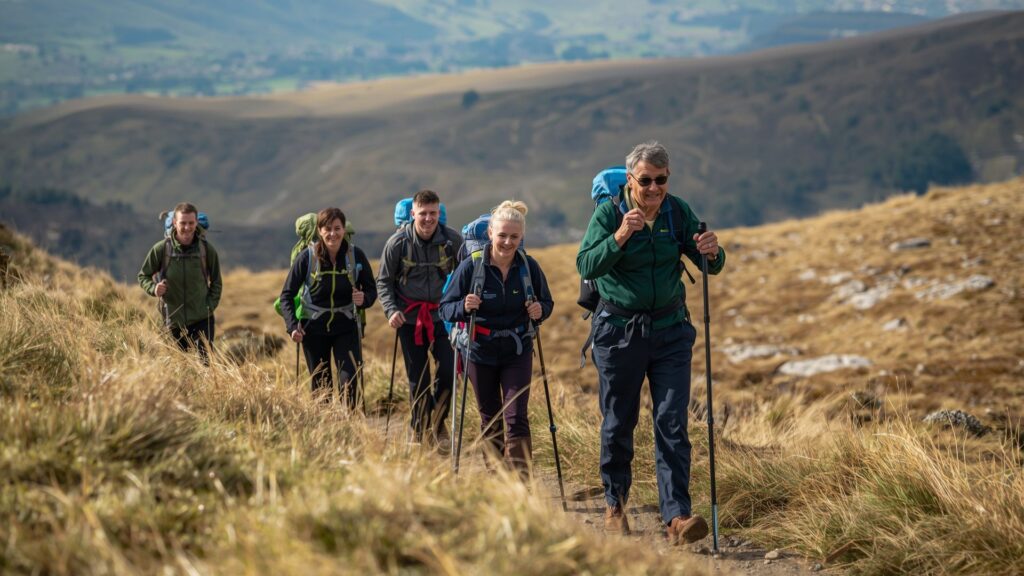
Walking properly becomes automatic through consistent practice and mindful attention to technique. Dedicate time each day to conscious form practice rather than expecting immediate perfection. Small improvements compound over weeks and months into significant technique enhancements.
Begin with short walks of 15 to 20 minutes where you focus exclusively on one or two technique elements. Concentrate on head position during one walk, arm swing during the next, and foot strike patterns during a third walk. This focused approach prevents overwhelming yourself with too many simultaneous corrections.
Gradually increase walking duration as your technique improves. Most adults benefit from 30 minutes of daily walking for basic health maintenance. Extend walks to 45 to 60 minutes for weight management and cardiovascular conditioning. Listen to your body and reduce duration if pain or excessive fatigue develops.
Pat Falvey Irish & Worldwide Adventures offers guided walks throughout Kerry that help participants develop proper walking technique whilst exploring beautiful landscapes. These regular walks provide structured opportunities to practise and refine your form under expert guidance. Contact Pat Falvey at +353 64 6644 181 to join guided walking programmes.