
Taking on mountain trekking challenges requires proper preparation to avoid blisters, muscle soreness, and altitude difficulties. These essential tips for trekking cover everything from training schedules to equipment selection. Pat Falvey Irish & Worldwide Adventures has developed these tips for trekking through 30 years of guiding expeditions across Ireland, Nepal, Tanzania, and beyond.
Treks vary in daily distances, ascent profiles, descent gradients, and altitude exposure. Each trek demands specific physical conditioning and mental preparation. These proven tips for trekking prepare you correctly so you enjoy your adventure rather than nursing injuries after the first day. Whether you plan to climb Carrauntoohil or attempt Kilimanjaro expeditions, proper preparation determines your success.
Start Your Trekking Training Early
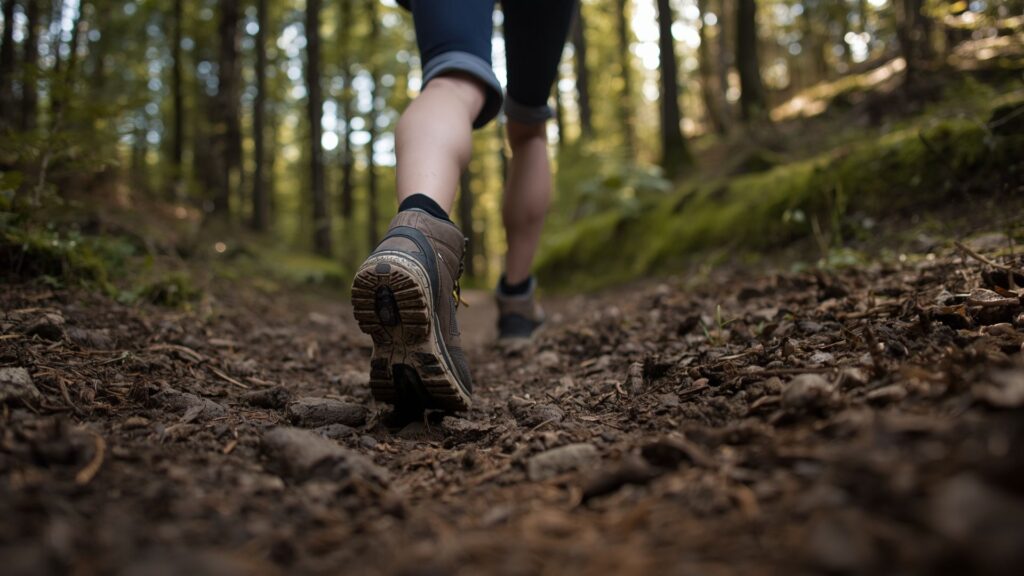
Trek training begins 12 months before departure for major expeditions like Everest Base Camp. Early preparation delivers multiple benefits that last-minute training cannot replicate.
Building strength and fitness gradually gives your body time to adapt to new physical demands. Gradual progression reduces injury risk whilst improving cardiovascular capacity, muscular endurance, and joint stability. Pat Falvey recommends starting with 30-minute walks three times weekly, then increasing duration by 10% each week.
Training follows three phases over 12 months. The foundation phase builds aerobic base with flat-terrain walks of 45-90 minutes at comfortable pace. The building phase introduces hill training and increases distances to 2-4 hours. The peak phase completes full-day treks matching your target expedition distance.
Athletes training for technical peaks like Island Peak require additional altitude preparation. Simulated altitude training improves red blood cell production and oxygen efficiency at elevations above 4,000 metres.
Choose the Correct Footwear for Your Trek
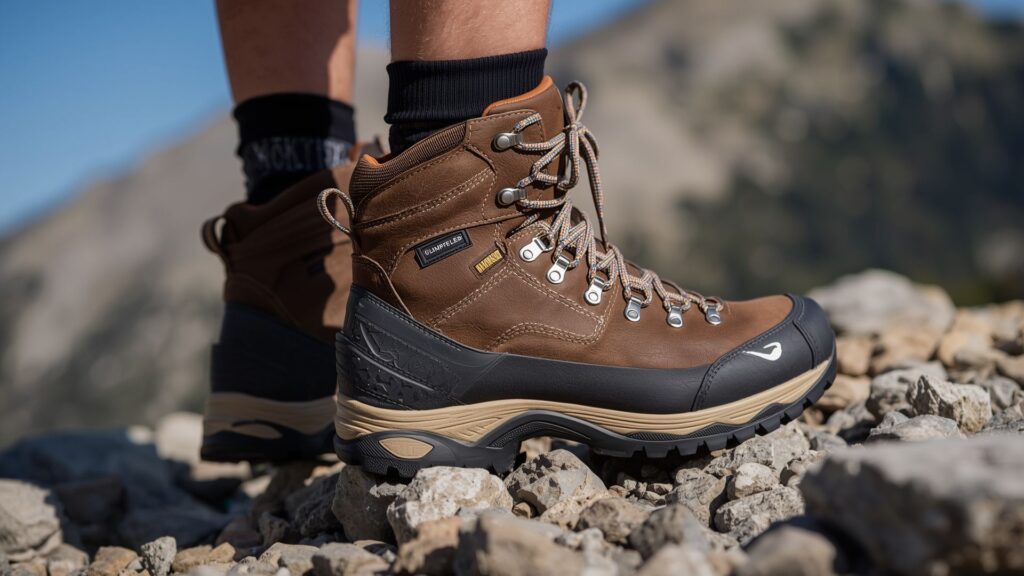
Quality footwear forms the foundation of successful trekking, yet 60% of trekkers experience foot problems due to poor boot selection. These tips for trekking footwear prevent painful blisters and ankle injuries.
Supportive hiking boots with ankle protection prove essential for mountain terrain. The ankle cuff height matters significantly because overly high cuffs irritate the Achilles tendon during repetitive stepping motions. Select boots with ankle cuffs scooped away at the back to avoid tendon friction.
Breaking in trekking boots takes 30-50 hours of walking before departure. Wear your new boots on training walks to identify pressure points whilst your feet bed into the boot shape. Address hot spots immediately with moleskin padding or alternative lacing patterns.
Boot selection follows specific terrain requirements. Day hikes need mid-height boots with flexible soles and moderate ankle support. Multi-day treks like Kilimanjaro require full-leather boots with stiff soles and substantial ankle support. Technical expeditions like Aconcagua need mountaineering boots rated for crampon compatibility.
Purchase boots in the afternoon when your feet have expanded to their maximum daily size. Wear your intended trek socks during fitting. Test boots by walking downhill to check toe clearance and heel lock.
Select Proper Walking Socks
Boots receive considerable attention during trek preparation, yet sock selection determines comfort equally. The wrong socks ruin even the best boots through moisture accumulation, friction, and temperature regulation failures.
Modern trekking socks use technical fibres that outperform traditional cotton. Coolmax fibres transport moisture away from skin and dry 30% faster than merino wool. Merino wool blends regulate temperature in both hot and cold conditions whilst providing natural antimicrobial properties. Gore-Tex sock systems provide waterproof protection for bog crossings or monsoon trekking.
Wear the same socks during boot fitting that you intend to use on your trek. Sock thickness affects boot fit by 0.5-1 full sizes. Purchase 4-5 pairs of identical socks to rotate daily during training and expeditions.
Build Leg Strength With Targeted Exercises
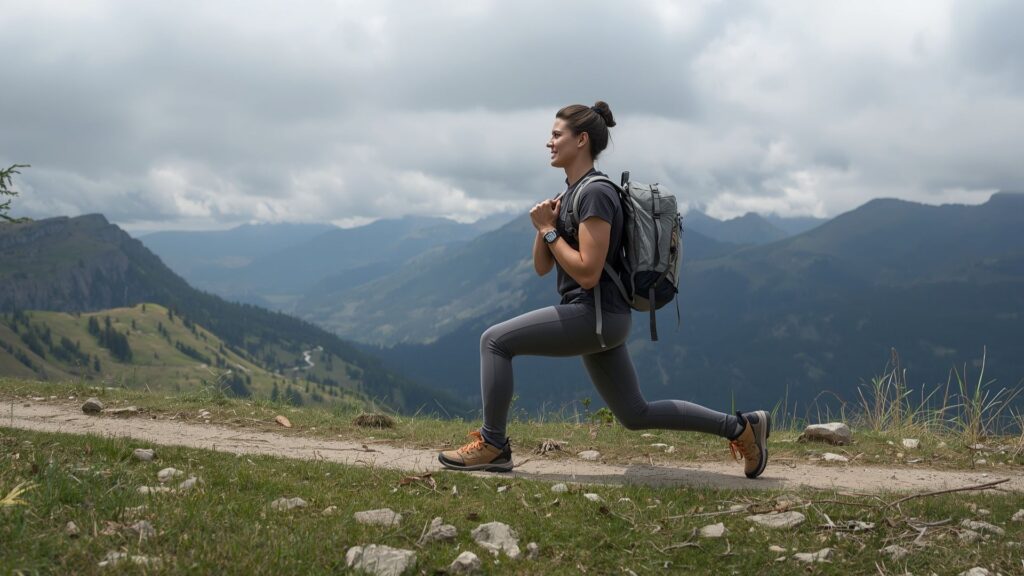
Leg strength determines your capacity to climb steep gradients, descend safely, and maintain pace over long distances. Walking training alone provides insufficient strength for technical mountains.
Strength training twice weekly complements walking training effectively. Weighted squats build quadriceps and glute strength for uphill power. Bulgarian split squats develop single-leg stability crucial for rocky terrain. Leg press machines generate maximum leg strength safely with supported back position. Walking lunges replicate trekking motion whilst building hip flexor endurance. Calf raises strengthen lower leg muscles that stabilise ankle joints on uneven ground.
Pat Falvey recommends training legs on Mondays and Thursdays, allowing 72 hours recovery between sessions. Schedule walking training on Wednesdays, Saturdays, and Sundays to maintain cardiovascular fitness whilst legs recover from strength work.
Build Your Walking Training Programme
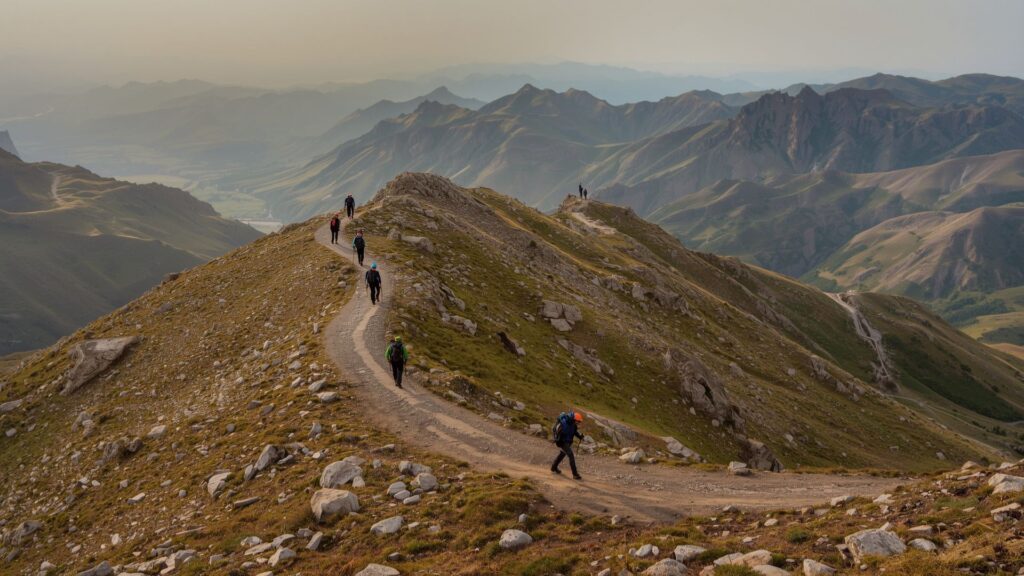
Walking training forms the foundation of trek preparation because it conditions your body to the specific demands of prolonged hiking. These tips for trekking training build steadily towards expedition distances.
Progressive overload follows the 10% rule where weekly distance increases by no more than 10% to prevent overuse injuries. Begin with three walks of 45-60 minutes on flat terrain at conversational pace. Progress to four walks of 60-90 minutes and introduce one hill session weekly. Continue building to five walks weekly including one 2-3 hour session.
Incorporate back-to-back training days where you walk 2-3 hours on Saturday followed by another 2-3 hours on Sunday. This replicates multi-day trek fatigue. Complete one full-day trek monthly matching your target expedition distance.
Intersperse training days with rest days during initial months. As fitness improves, include back-to-back training days that closely replicate your actual trek conditions. Recovery remains essential because adaptation occurs during rest periods, not during training stress.
Train on Similar Walking Terrain
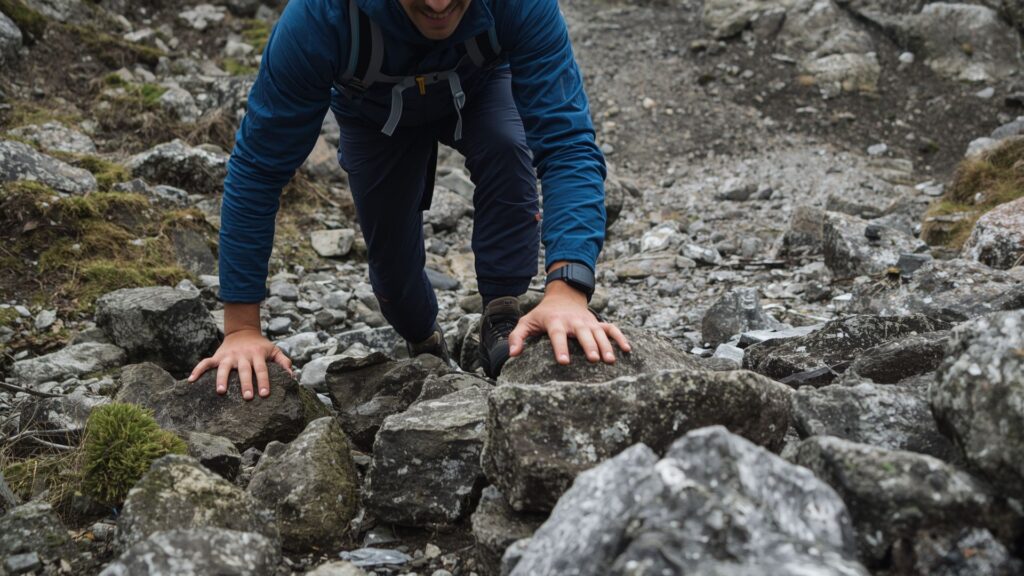
Walking training proves essential, yet terrain specificity determines how well your training transfers to actual trek conditions. Training on flat pavements poorly prepares you for rocky mountain paths.
Match your training terrain to your destination. Ireland mountain treks need practice on rocky, uneven trails with frequent elevation changes. Himalayan expeditions require long gradual ascents and practice walking on stone steps. African peaks need heat tolerance through midday training and volcanic scree descent practice.
Practice in the same footwear and clothing you will use on expedition. Experiment with a fully loaded backpack because pack weight reduces your speed over ground by 15-20%. Test different pack adjustments to find optimal weight distribution between hips and shoulders.
Weekend scrambling develops skills needed for technical approaches. Visit locations like Brandon Mountain in Kerry to build confidence moving over mixed terrain using hands occasionally for balance.
Practice Using Your Backpack System
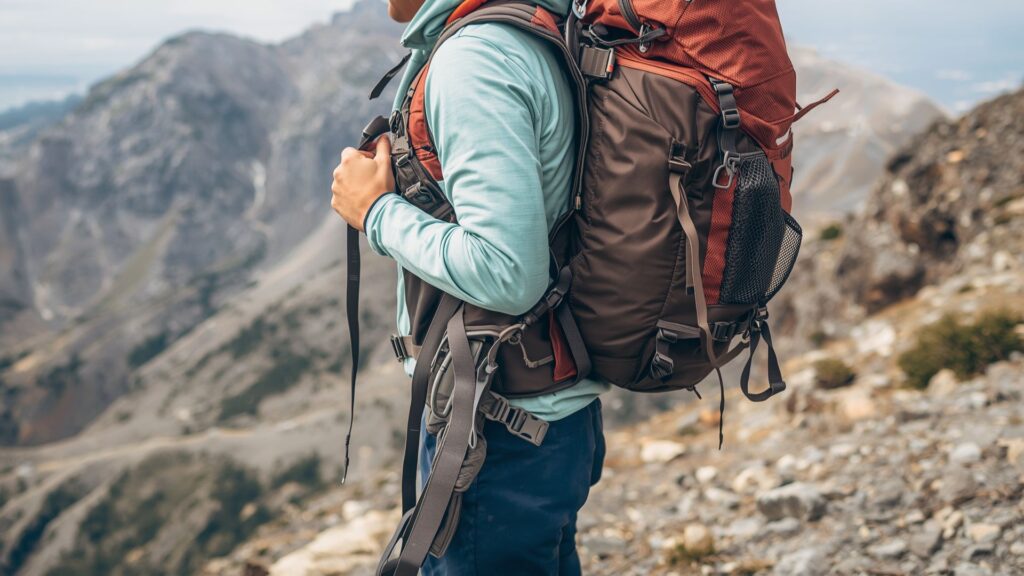
Backpack selection and fitting significantly impact trekking comfort since you carry this load for 6-8 hours daily. Poor pack design causes back pain, shoulder strain, and hip chafing.
Backpack capacity depends on expedition type and porter availability. Day packs of 20-30 litres suit guided Carrauntoohil hikes where you carry only lunch, water, and layers. Multi-day packs of 40-55 litres work for porter-supported treks. Full expedition packs of 60-75 litres prove necessary for self-supported treks requiring technical gear.
Select models with adjustable chest and waist straps that position the pack correctly on your back. External compression straps prevent load shift during movement. Place 60-70% of weight on hip belt by tightening first. Adjust shoulder straps to remove slack without lifting pack off hips.
Practice using your loaded backpack during all training walks so you adapt to the weight and position. Add weight progressively starting at 5kg and increasing to full trek load over 8-12 weeks.
Use Walking Poles for Stability and Efficiency
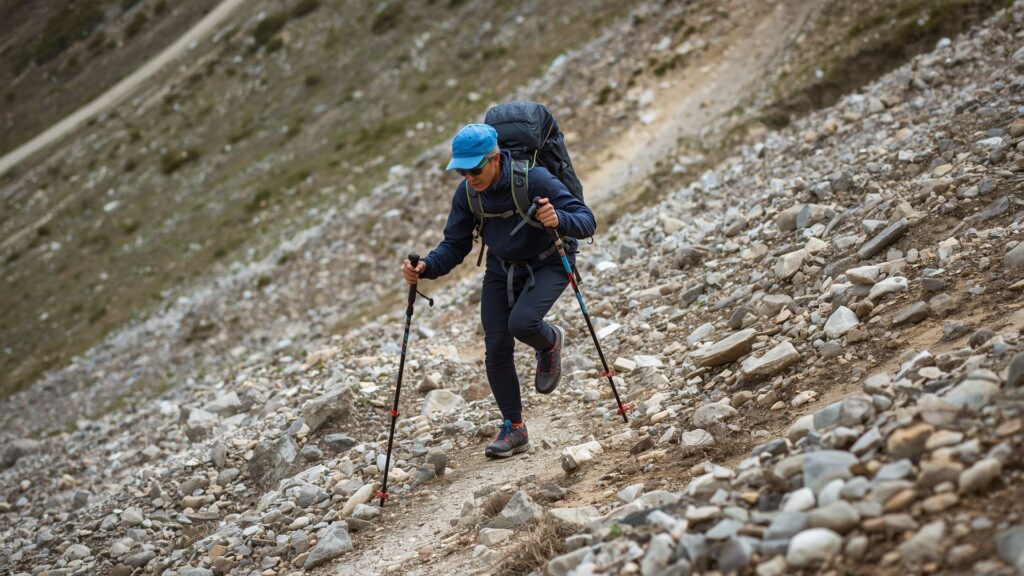
Walking poles transform your trekking experience by distributing effort across four points of contact rather than two. Research shows poles reduce knee stress by 25% on descents whilst increasing climbing efficiency by 12% on steep ascents.
Lightweight telescopic poles ease the load on knees and thighs during descents whilst providing two extra legs on steep climbs. Carbon fibre models weigh just 200-250 grams per pole.
Pole adjustment follows terrain-specific guidelines. Shorten poles by 5-10cm for uphill sections. Set poles so forearms remain parallel to ground on flat terrain. Lengthen poles by 5-10cm for downhill sections to maintain upright posture.
Walking poles clear vegetation from paths and provide multiple uses at campsites including tarp support and tent reinforcement. Poles also improve balance when crossing streams or navigating ice patches.
Hydrate Frequently During All Training and Treks
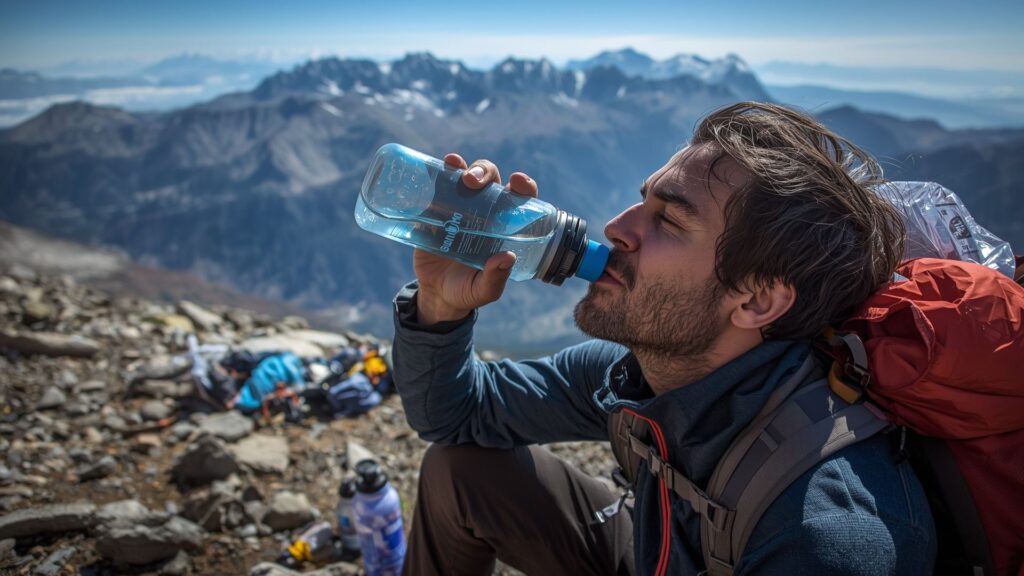
Hydration determines your performance, safety, and acclimatisation success during mountain trekking. Dehydration of just 2% bodyweight reduces endurance capacity by 20% and increases altitude sickness risk at elevations above 3,000 metres.
Fluid requirements increase substantially when trekking regardless of climate. Respiratory water losses and sweating reduce your blood volume, forcing your heart to work harder to maintain circulation. Thirst indicates existing dehydration, so drink small, frequent quantities of water throughout the day.
Temperate climates require 2-3 litres daily during 6-8 hour treks. Hot climates need 4-5 litres daily to replace sweat losses. High altitude above 4,000 metres demands 5-6 litres daily because respiratory water losses double in dry mountain air.
Carry out the urine test to monitor hydration status continuously. Pale straw colour indicates proper hydration. Dark yellow or amber urine means you need to increase fluid intake immediately.
Fuel Your Trekking With Proper Nutrition
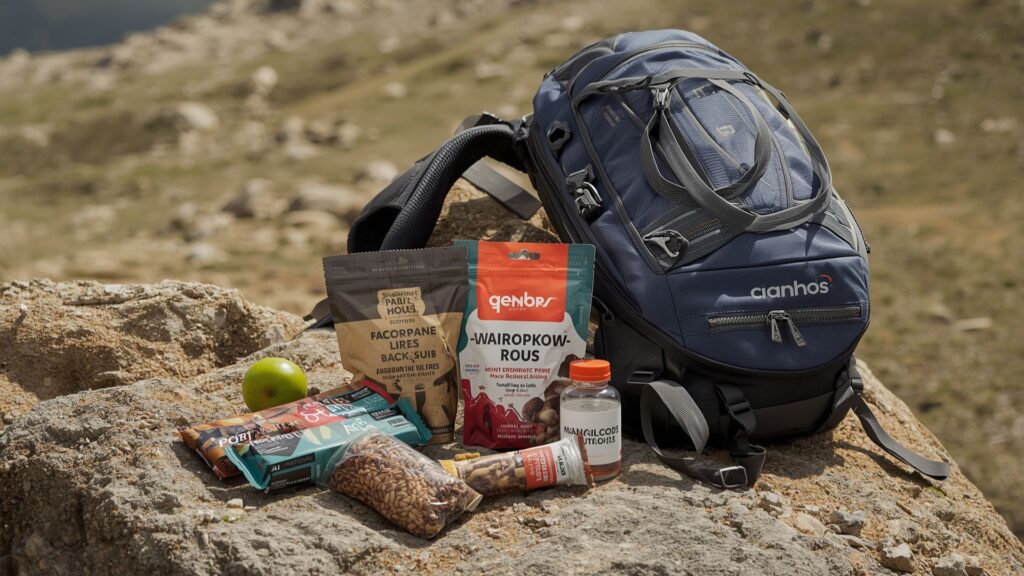
Energy requirements increase substantially during mountain trekking compared to normal daily activity. Caloric needs range from 3,000 calories on moderate day hikes to 6,000+ calories during high-altitude expeditions.
Eat small, frequent meals and snacks throughout the day to maintain stable energy levels. Waiting until hunger strikes indicates depleted glycogen stores that take hours to replenish.
Consume 300-400 calories from complex carbohydrates 2 hours before trekking. Eat 150-200 calories every 60-90 minutes during trekking from energy bars, dried fruits, or nuts. Consume 400-500 calories combining carbohydrates and protein within 30 minutes after trekking.
Food availability depends on destination. Western snack foods prove scarce in remote regions. Fresh fruits remain available in most locations providing easy-to-eat options on the move with excellent energy content.
Altitude affects appetite significantly above 3,500 metres where 80% of trekkers experience reduced hunger despite increased caloric needs. Combat altitude anorexia by eating favourite high-calorie foods before appetite diminishes.
Experiment with eating whilst walking during training walks so you become accustomed to digesting food whilst maintaining physical effort.
Achieve Trek Fitness With Comprehensive Preparation
Fitness levels before departure determine how easily you complete your trek and how much you enjoy the experience. Pat Falvey Irish & Worldwide Adventures recommends 12-16 weeks minimum preparation for major expeditions.
Investment in preparation pays dividends through reduced injury risk, increased summit success rates, and greater enjoyment of spectacular mountain environments. You will have spent considerable time, effort, and money reaching your trekking location, so maximising your experience through proper preparation makes complete sense.
These tips for trekking create a foundation for success on any mountain expedition. Whether you plan your first Carrauntoohil climb, dream of reaching Kilimanjaro’s summit, or aim to trek to Everest Base Camp, proper preparation separates struggling from thriving.
Pat Falvey Irish & Worldwide Adventures offers guided treks across Ireland, Nepal, Tanzania, Morocco, and Peru. Professional mountain guides provide safety, local knowledge, and logistical support. Visit The Mountain Lodge in Beaufort, County Kerry for training weekends and preparation courses.
Following these tips for trekking prepares you physically and mentally for possibly a trip of a lifetime. You will gain so much more from your trekking experience through proper training, equipment selection, and mental preparation.