
Winter hiking requires specialised winter gear to navigate snowy and icy trails safely. Pat Falvey Irish & Worldwide Adventures provides guided winter treks across Ireland’s mountains with over 30 years of experience in extreme conditions. This comprehensive guide explains the essential winter gear you need, how to use each piece properly, and when specific equipment becomes necessary for safe mountain travel.
Understanding Essential Winter Gear
Winter gear transforms challenging mountain conditions into manageable adventures. The three most critical pieces of winter gear are gaiters, crampons and an ice axe. Gaiters prevent snow from entering your boots, crampons provide traction on icy surfaces, and an ice axe allows you to arrest falls on steep, icy terrain.
Pat Falvey’s guided winter expeditions to Carrauntoohil require proper winter gear selection based on current mountain conditions. Weather in Kerry’s MacGillycuddy’s Reeks can change rapidly, making appropriate equipment selection vital for every winter climb. Most winter hikers wear gaiters on all snowy treks. Crampons and ice axes become necessary only when ice and hard-packed snow cover the trails. Understanding when to deploy each piece of winter gear prevents both under-preparation and carrying unnecessary weight.
What Are Gaiters and When Do You Need Them
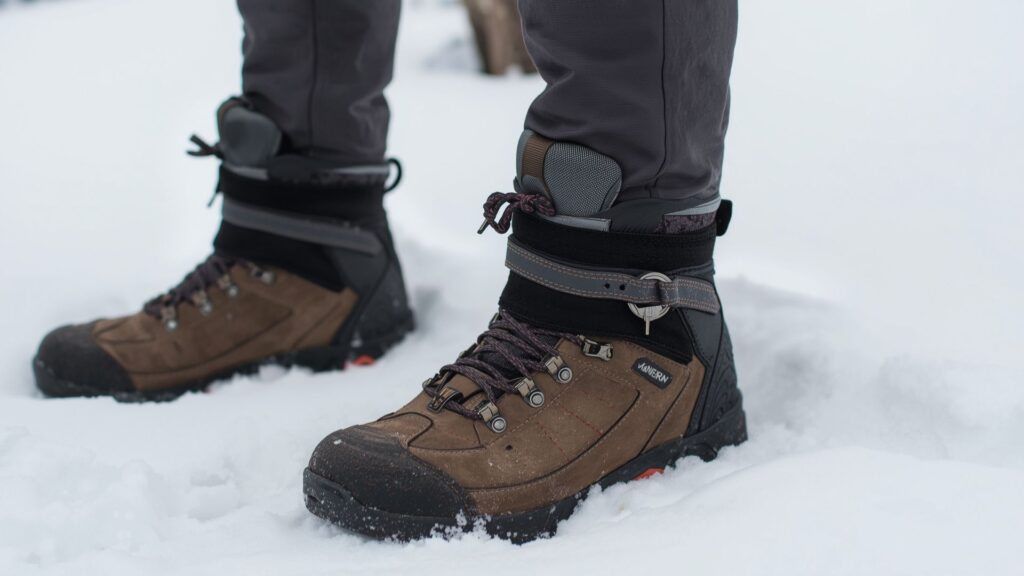
Gaiters are protective coverings made from waterproof and breathable fabric that extend over your boots and lower trouser legs. These essential pieces of winter gear create a sealed barrier preventing snow, mud and debris from entering your footwear whilst maintaining breathability for comfort during strenuous climbs.
Quality gaiters feature instep straps that run beneath your boot sole and lace hooks that attach to your boot laces. This dual-attachment system keeps gaiters firmly positioned during challenging terrain. Modern gaiters secure to trouser legs with Velcro closures rather than zippers, allowing faster deployment and more reliable weather protection. A drawcord at the top provides additional security around your calf or knee.
Gaiters are available in three primary lengths. Ankle gaiters suit trail running and light hiking. Mid-calf gaiters work well for moderate winter conditions. Knee-length gaiters offer the best versatility for serious winter hiking, providing maximum protection in deep snow whilst remaining manageable for extended treks.
Gaiters become essential winter gear in two primary conditions. Snowy trails require gaiters to prevent snow from compacting inside your boots, which causes cold feet and potential frostbite. Muddy trails also benefit from gaiters, keeping your boots clean and your feet dry throughout the hike. Pat Falvey’s winter expeditions to Ireland’s highest peaks always include gaiters in the required winter gear list. The unpredictable weather across Carrauntoohil’s routes means snow can appear at any time during winter months.
Understanding Crampons for Winter Hiking
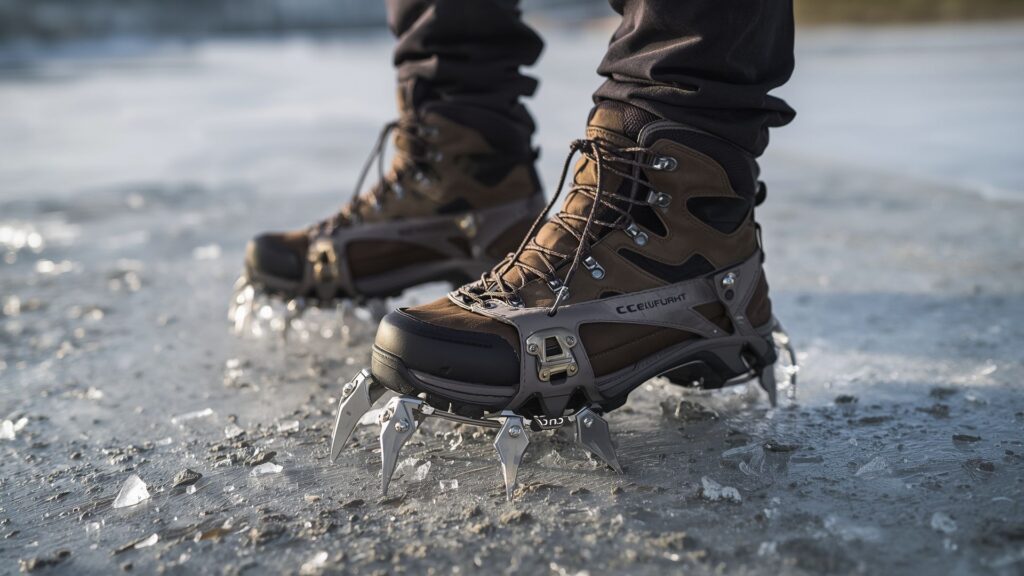
Crampons are traction devices that attach to hiking boots, featuring metal spikes that bite into ice and hard-packed snow. These crucial pieces of winter gear transform your boots into ice-climbing capable footwear, providing security on terrain that would otherwise be impassable or extremely dangerous.
Crampons are classified into three categories: C1, C2 and C3. C1 crampons suit winter hiking and feature strap-on bindings that work with any hiking boot. C2 crampons require boots with a rear welt and are designed for steeper terrain. C3 crampons need boots with both front and rear welts and are intended for technical ice climbing and mountaineering.
For Ireland’s winter hiking routes, C1 crampons provide the optimal balance between accessibility and performance. These models attach securely to standard hiking boots with relatively stiff soles, making them the preferred choice for Pat Falvey’s guided mountain expeditions.
Steel crampons offer superior durability and better ice penetration than aluminium alternatives. Steel maintains its sharp edge longer and provides more reliable purchase on hard ice. The spike configuration matters significantly. Ten-point crampons provide sufficient traction for walking on moderate ice. Twelve-point crampons add front points that enable steeper ascents. For standard winter hiking on mountains like Carrauntoohil, twelve-point crampons offer the versatility needed for varying conditions.
Deploy crampons when you encounter icy terrain where normal boots cannot maintain traction. Compressed snow that has frozen into ice requires crampons for safe passage. Pat Falvey’s mountain guides assess conditions before each Carrauntoohil trek to determine whether crampons form part of the essential winter gear for that specific day. Weather patterns in Kerry can create icy conditions above 600 metres elevation even when lower slopes remain snow-free.
Walk with a wider stance when wearing crampons to prevent spiking your opposite ankle or snagging your trousers. Place your entire foot flat on the ice with each step, ensuring all points make contact. On steep slopes, use the front-pointing technique where you kick the front spikes into the ice and transfer your weight onto them. Practice walking in crampons before attempting serious winter hikes, as the altered gait feels unnatural initially.
Ice Axe Fundamentals for Winter Hiking
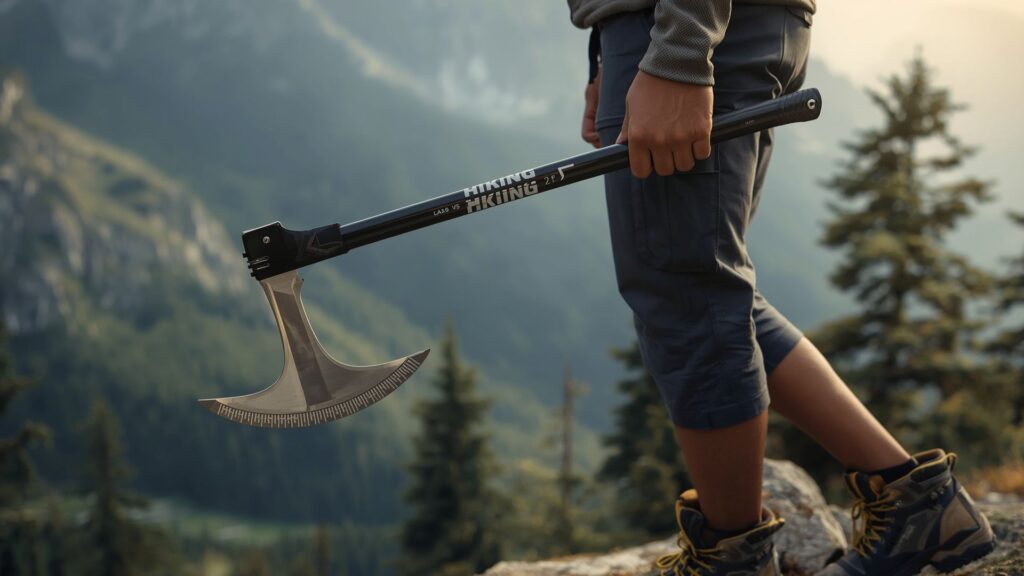
An ice axe serves as a multi-purpose tool that provides balance, creates anchor points and enables self-arrest if you fall on icy slopes. This essential piece of winter gear becomes a natural extension of your hiking technique on challenging winter terrain, offering both security and confidence.
Ice axes consist of a shaft and a head. The head features a pick that points backwards during normal walking and an adze facing the opposite direction. Hiking ice axes feature long, straight shafts measuring 60-70 centimetres for most users. Technical climbing ice axes have shorter, curved shafts designed for steep ice rather than winter hiking. The spike at the shaft’s base penetrates snow and ice, providing additional stability on moderate slopes.
Choose an ice axe length that allows the spike to hang approximately 5 centimetres above the ground when you hold the axe head in your hand with your arm relaxed at your side. This length provides optimal leverage for self-arrest whilst remaining manageable for walking. Most hikers between 165-180 centimetres tall use 60-65 centimetre ice axes. Pat Falvey Irish & Worldwide Adventures provides properly sized winter gear for all guided expeditions, ensuring each participant has equipment appropriate for their height and the specific terrain conditions.
Carry an ice axe when hiking on snowy or icy terrain with any significant slope angle. Slopes above 25 degrees with ice coverage require ice axe capability for safe descent. Many winter hikers carry an ice axe throughout winter months on Irish mountains as a precautionary measure, even when conditions do not strictly require its use.
Hold the ice axe at the head with the pick pointing backwards whilst walking on moderate terrain. Use the axe like a walking pole, planting the spike with each step for additional stability. On steeper slopes, switch to an uphill grip where you hold the shaft near the spike and drive the pick into the slope above you. This technique creates a secure anchor point as you ascend.
Self-arrest prevents an uncontrolled slide down an icy slope from becoming a catastrophic accident. If you slip, immediately roll onto your stomach and drive the pick into the ice whilst keeping your body weight over the shaft. Your legs should be spread wide with toes lifted to prevent crampon points from catching and flipping you. Learning proper self-arrest requires instruction and practice. Pat Falvey’s mountain training programmes include self-arrest practice on safe slopes before participants attempt challenging winter routes.
Winter Gear Maintenance and Safety
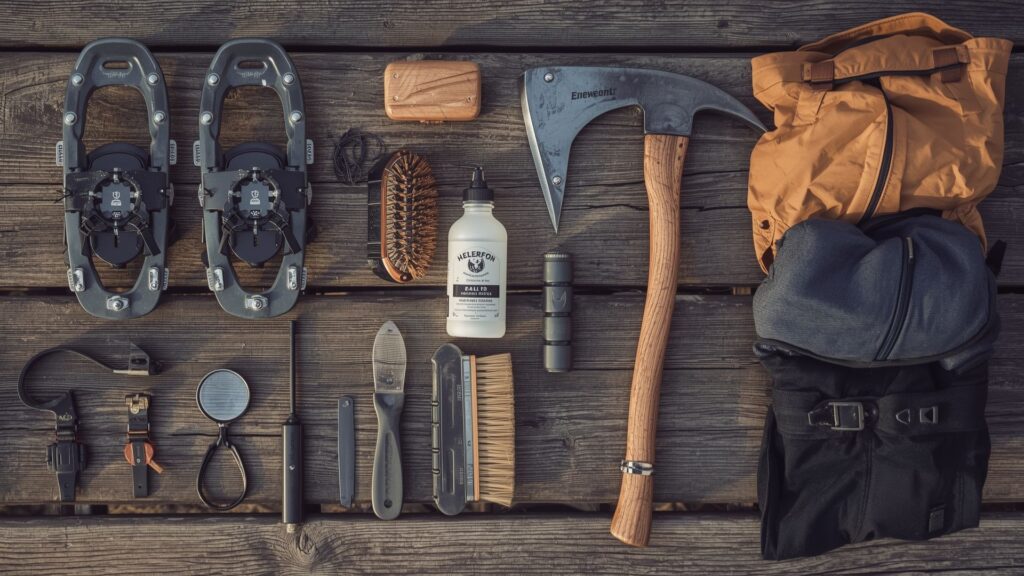
Proper maintenance extends the lifespan of your winter gear and ensures equipment functions correctly when needed. Inspect all equipment before each winter hike, checking for damaged straps, loose bindings and dull crampon points. Equipment failure on exposed mountain terrain creates dangerous situations that proper preparation prevents.
Clean crampons after each use to prevent rust and corrosion. Salt from roads and natural minerals in snow accelerate metal deterioration. Store crampons in a dry location with adequate ventilation. Check point sharpness regularly, as dull spikes cannot penetrate hard ice effectively. Professional crampon sharpening services restore proper cutting angles to worn points.
Inspect ice axe picks for chips, cracks and significant dulling after each expedition. Minor sharpening can be performed with a file, maintaining the original cutting angle. Never use an ice axe with a cracked head, as failure during self-arrest can prove fatal. Store ice axes with protective covers over the pick and adze to prevent accidental injury and damage to other equipment.
Clean gaiters after muddy or snowy hikes to maintain waterproof coatings and fabric integrity. Most gaiters are machine washable on gentle cycles with technical fabric detergent. Avoid fabric softeners, which damage waterproof coatings. Inspect straps and buckles for wear and damage. Replace worn components before they fail during critical moments on the mountain.
Training and Weather Assessment
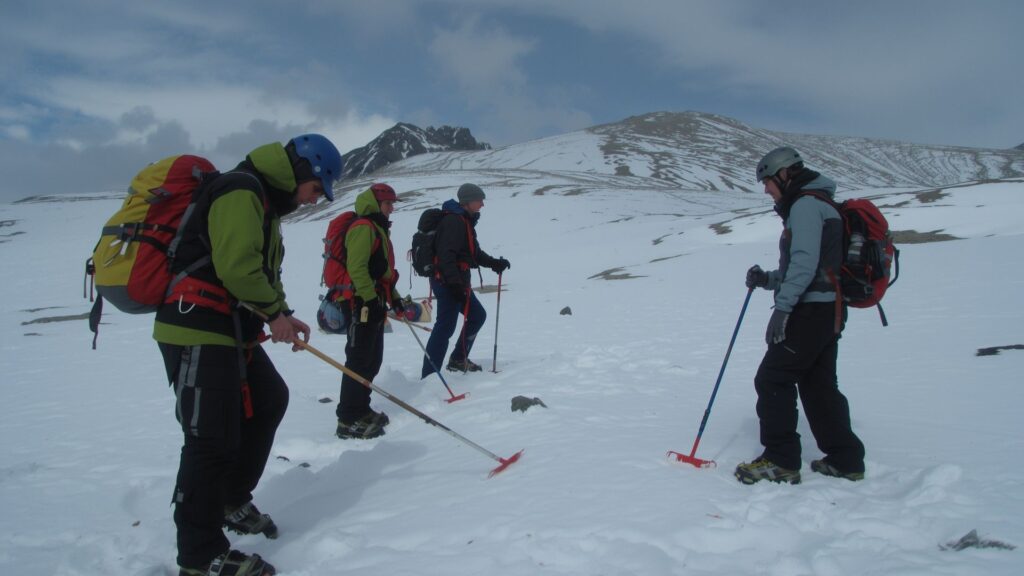
Winter hiking demands specific skills beyond summer hiking capabilities. Physical fitness forms the foundation, but technical knowledge of winter gear use separates safe hikers from those at risk. Pat Falvey Irish & Worldwide Adventures offers comprehensive training through The Mountain Lodge, preparing participants for Ireland’s challenging winter conditions.
Winter hiking requires greater energy expenditure than summer hiking due to difficult terrain, heavy clothing and deep snow. Cardiovascular fitness enables you to maintain body heat through movement whilst carrying additional winter gear weight. Balance exercises translate directly to crampon walking and ice axe placement skills.
Understanding weather patterns determines whether winter gear will suffice for specific conditions or whether postponing the hike provides the safer option. Mountain weather in Ireland changes rapidly, with conditions at summit elevation differing dramatically from valley conditions. Mountain-specific weather forecasts provide more accurate information than general regional forecasts. Wind speeds increase significantly with altitude, and precipitation often changes from rain to snow above 600 metres elevation.
High winds combine with cold temperatures to create wind chill that dramatically increases frostbite risk. Winds above 50 kilometres per hour make winter hiking extremely difficult and dangerous, even with proper winter gear. Temperature inversions can create icy conditions on summit ridges whilst lower slopes remain relatively warm. Always carry full winter gear when attempting Irish mountains during winter months, regardless of starting conditions.