
The power of listening transforms how we communicate with children, team members, and colleagues in challenging situations. Pat Falvey Irish & Worldwide Adventures applies listening principles developed across 30 years of mountain leadership to help individuals and teams navigate difficult conversations. This guide explores practical listening techniques, real-world applications, and methods to improve communication during stressful moments.
Understanding the Power of Listening in High-Stakes Situations

The power of listening becomes most evident during moments of uncertainty and stress. Whether guiding a team through adverse weather on Carrauntoohil or helping families navigate difficult conversations, the ability to listen actively shapes outcomes. Pat Falvey’s experience leading over 2,000 climbers to Kilimanjaro’s summit demonstrates that listening forms the foundation of effective leadership and communication.
Communication extends beyond simply hearing words. The power of listening involves understanding emotions, reading body language, and recognising what remains unspoken. In mountaineering, guides must listen to a client’s breathing patterns, observe their pace, and detect subtle signs of altitude sickness before symptoms become critical. These same principles apply to everyday conversations, particularly when discussing challenging topics with children or managing team dynamics.
How Communication with Children Teaches Adult Leadership Skills
Thinking about how to communicate with a child provides valuable lessons for adult interactions with team members, staff, and peers. The power of listening proves vital in understanding all viewpoints rather than focusing solely on personal perspectives. Empathy enables us to understand where people originate from and their version of events. We rarely see all elements of a problem with complete clarity, making questions and active listening essential.
Children require direct, honest communication delivered at their comprehension level. This same principle applies when leading guided Carrauntoohil hikes where participants arrive with varying experience levels. A mountain guide must assess each person’s understanding, address fears, and provide information without overwhelming less experienced climbers. The power of listening helps identify knowledge gaps and emotional states that influence how people process information.
My Story: The Power of Listening in a Hospital Ward
Recently I attended the hospital for a routine check requiring an overnight stay. I found myself observing a family man in the ward down the corridor from me. I did not speak to the man directly and remain unaware of his illness extent, but I noticed three young children who visited him. They laughed with wide eyes whilst adults around them spoke in hushed tones. This observation prompted reflection on how children process trauma and how parents guide children facing trauma for the first time.
Who provides parents with coping strategies? How do you explain to your child that daddy faces illness, and who grants you expert status whilst you simultaneously manage your anxiety for your partner? The situation creates stress and fear whilst demanding that parents cope with personal worry and respond appropriately to their child’s needs.
The power of listening proves perhaps the most critical skill during these moments. Parents often feel pressure to have all answers immediately, yet asking questions first provides more valuable information than making assumptions about a child’s understanding or emotional state.
Why Honesty Requires Strategic Communication

Honesty proves vital when discussing difficult topics with children, but determining the appropriate level of honesty presents challenges. The power of listening offers a starting point: ask your child to explain what they think happens. Understanding what your child already knows or fears provides a foundation for building dialogue. Asking your child what they want to know helps avoid overwhelming them with excessive adult detail that exceeds their processing capacity.
Children rarely understand the full complexity of life and death. Questions like “why is daddy hurting?”, “can I touch his hand?”, and “what is that machine doing?” represent concrete inquiries that adults can address directly. These questions deserve straightforward answers that reassure rather than confuse. Before entering the ward, giving a child advance information about the visual environment helps reduce anxiety. Describe staff in uniforms, white beds and furniture, curtains and enclosures, machines and wires.
This preparation mirrors the briefings Pat Falvey provides before Everest Base Camp treks. Participants receive detailed information about altitude effects, daily routines, and physical demands before departure. This advance knowledge reduces fear and builds confidence, enabling trekkers to focus on the experience rather than unexpected surprises.
Practical Techniques for Understanding Children’s Perspectives
The power of listening extends beyond verbal communication. Visual tools help adults access children’s internal understanding of difficult situations. Asking a child to draw a picture of what they think daddy might look like in the hospital taps into their comprehension level. Adults can add to their picture to show a drip or a nurse in uniform “helping daddy to get well”. If sketching skills prove inadequate, a photograph of the ward facilitates conversation about what they might expect to see, smell, and hear.
These visual communication methods work because children process information differently than adults. Young minds grasp concrete images more readily than abstract explanations. A drawing or photograph transforms an unknown environment into something manageable and less frightening.
Pat Falvey applies similar principles when preparing clients for guided mountain expeditions. Photographs of previous treks, equipment demonstrations, and detailed route descriptions transform abstract concepts into tangible expectations. Clients arrive at The Mountain Lodge in Beaufort, County Kerry, better prepared because they visualised the experience beforehand.
How Fear Reduces Through Knowledge and Communication
Like many situations in life, fear diminishes through knowledge and communication. The power of listening represents perhaps the most critical skill of all. When parents truly listen to their children’s questions and concerns, they gain insight into specific fears rather than general anxiety. A child worried about machines making noise requires different reassurance than a child concerned about touching their parent.
Active listening involves several components beyond simply remaining quiet whilst another person speaks. Effective listeners maintain eye contact, acknowledge emotions, ask clarifying questions, and summarise what they heard to confirm understanding. These techniques apply equally whether consoling a frightened child or debriefing a team after a challenging mountain ascent.
Applying Listening Skills in Professional Team Environments

The power of listening transforms team dynamics in professional settings. Leaders who genuinely listen to staff concerns, ideas, and feedback create environments where innovation flourishes. Pat Falvey’s corporate speaking engagements emphasise that mountaineering leadership principles transfer directly to business contexts. A CEO who listens to frontline employees gains insights that boardroom discussions rarely reveal.
Effective team listening requires creating psychological safety where members feel comfortable expressing dissenting opinions or admitting mistakes. On mountains, guides need climbers to report symptoms honestly rather than hiding problems to avoid slowing the group. This transparency depends on leaders who demonstrate through consistent behaviour that listening precedes judgement.
During Kilimanjaro expeditions, guides monitor clients continuously for signs of altitude sickness. Climbers often underreport symptoms, saying they feel “okay” when they struggle significantly. Experienced guides recognise discrepancies between words and physical presentation, asking specific questions that reveal true conditions.
Building Trust Through Consistent Listening Practice
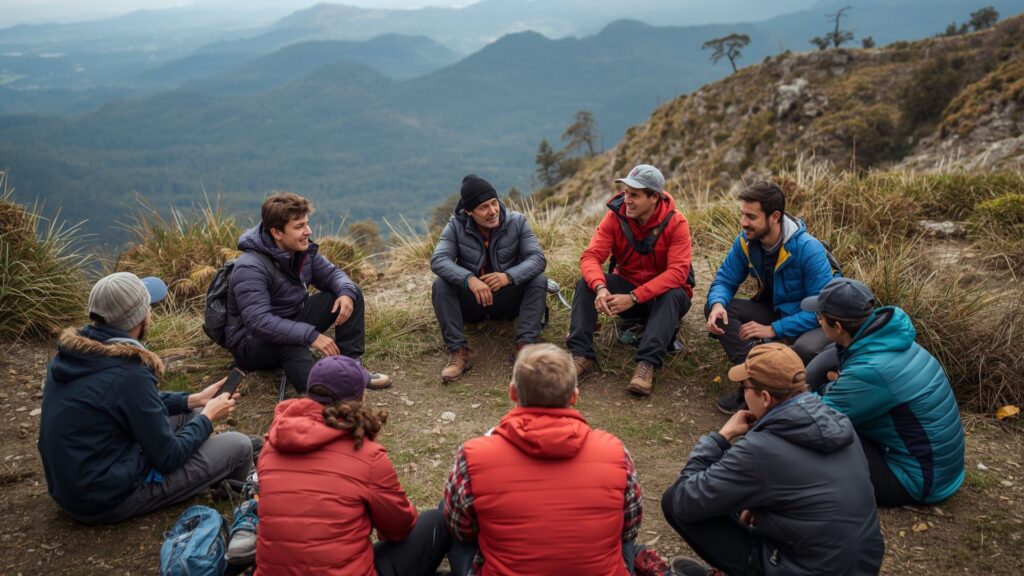
Trust develops through consistent demonstration of listening skills over time. Children learn to confide in parents who regularly make time for conversations, maintain confidentiality when appropriate, and follow through on commitments. Team members share ideas with leaders who acknowledge contributions, provide constructive feedback, and implement suggestions when feasible.
Pat Falvey built his reputation across 30 years by listening to clients’ goals, fears, and limitations, then designing experiences that challenged without overwhelming participants. This client-centred approach resulted in 65+ successful Kilimanjaro summits and over 2,000 people safely guided to African peaks. The power of listening created this track record by ensuring each expedition matched participants’ capabilities and aspirations.
Building listening skills requires deliberate practice. Start by eliminating distractions during conversations by putting away phones, closing laptops, and facing the speaker directly. Practice summarising what you heard before responding: “What I’m hearing is…” or “It sounds like you’re concerned about…”. These simple techniques demonstrate engagement and ensure accurate understanding before offering solutions or advice.