
Pat Falvey carries the Don’t Quit poem everywhere after it saved him from despair during Ireland’s 1980s recession. His mother gave him this verse when he lost his business, confidence, and nearly his life. The Don’t Quit message teaches that persistence through failure leads to success, a principle Pat applies to every mountain expedition and speaking engagement today.
My Darkest Hour and the Verse That Changed Everything

The 1980s recession hit Ireland with brutal force. Pat Falvey watched his construction business collapse, debts pile up, and his self-worth crumble. Depression consumed him. Suicidal thoughts became daily companions. His family intervened at the critical moment, and his mother handed him a folded piece of paper containing the Don’t Quit poem.
In the height of the 80’s recession, I lost everything, lost my self-confidence, self-esteem, money, and was suicidal. My family and friends rallied together to help me save my sanity. I was given the Don’t Quit verse by my mother that inspired me to fight back. I carry it with me all the time now. Don’t Quit.
That small piece of paper became Pat’s lifeline. He read it every morning and every night. The words “Rest if you must but don’t you quit” gave him permission to pause without surrendering. Over months, the Don’t Quit philosophy rebuilt his mental foundation. He started small—one day at a time, one decision at a time, one step forward at a time.
The Don’t Quit Poem: Full Text
The Don’t Quit poem’s author remains unknown, though it has circulated since the early 1900s. Pat Falvey uses this version, which his mother copied by hand onto notepaper in 1982.
If you are feeling down or something is bothering you, or you have failed at achieving an objective or goal, The Don’t Quit verse offers profound lessons. Hold those thoughts in your mind and stay positive even when you are in despair.
Don’t Quit
When things go wrong as they sometimes will,
When the road seems all uphill.
When funds are low, and debts are high,
And you want to smile, but you have to sigh.
When care is pressing you down a bit,
Rest if you must but don’t you quit.
Life is queer with its twists and turns,
As every one of us sometimes learns.
And many a failure turns about,
When you might have won had you stuck it out.
Don’t give up though the pace seems slow,
You may succeed with another blow.
Success is failure turned inside out,
The silver tint of the clouds of doubt.
And you never can tell how close you are,
It may be near when it seems so far.
So stick to the fight when you’re the hardest hit,
It’s when things seem worst that you must not quit.
How the Don’t Quit Philosophy Applies to Mountain Expeditions
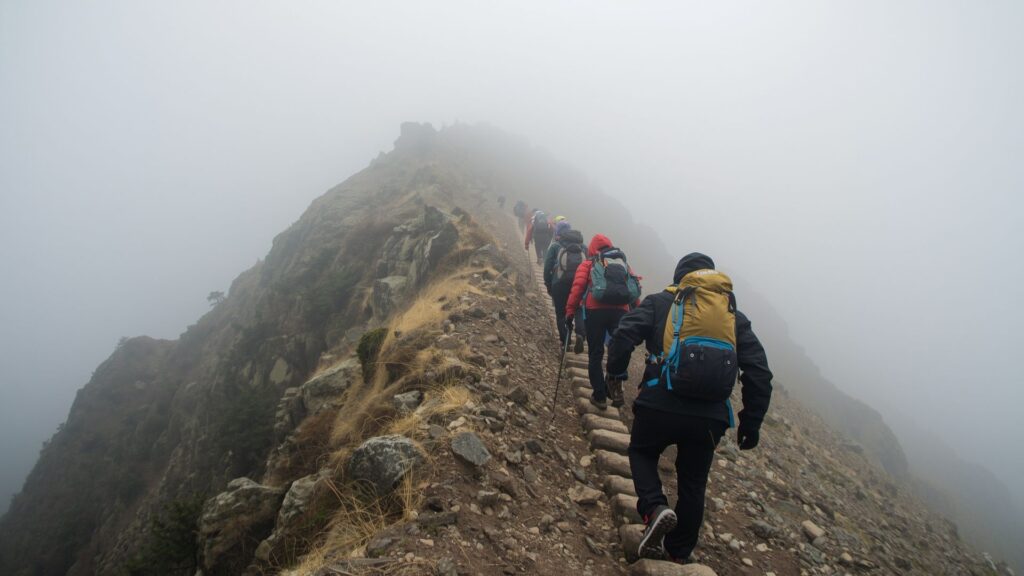
Pat Falvey applies Don’t Quit principles to every guided Carrauntoohil hike and international expedition. Mountains test mental resilience more than physical strength. Weather turns hostile. Altitude sickness strikes. Exhaustion overwhelms. The summit seems impossibly distant.
The Don’t Quit verse addresses these exact moments. “You never can tell how close you are” resonates at 5,800 metres on Kilimanjaro, where climbers question whether they can continue. Pat shares the poem with expedition members before difficult summit pushes. The words “Rest if you must but don’t you quit” give climbers permission to slow down without turning back.
Pat has guided over 2,000 people to Kilimanjaro’s summit since 1995. The majority face moments where quitting feels logical. Physical pain intensifies. Mental fatigue clouds judgement. The Don’t Quit message provides the psychological framework to push through temporary discomfort towards lasting achievement.
During his own Seven Summits expeditions—which he completed twice—Pat repeated the Don’t Quit verses during the hardest moments. On Everest’s South Col, at 8,000 metres, where oxygen deprivation creates hallucinations and every step requires monumental effort, he recited “stick to the fight when you’re the hardest hit” to maintain forward momentum.
Staying Positive When Everything Goes Wrong

The Don’t Quit poem teaches practical optimism, not blind positivity. Pat Falvey distinguishes between these approaches at his corporate speaking engagements. Blind positivity ignores reality. Practical optimism acknowledges difficulty whilst maintaining belief in eventual success.
Living in our challenging times, staying positive is important. No matter how terrible things get, a person who learns from mistakes and learns to stay positive will always succeed. The Don’t Quit principle shows that those who keep trying will win.
Pat identifies three Don’t Quit strategies that work in business, relationships, and physical challenges. First, break overwhelming goals into manageable segments. The poem states “Don’t give up though the pace seems slow”—progress matters more than speed. Second, rest without abandoning the objective. “Rest if you must but don’t you quit” gives permission for recovery periods. Third, remember that failure often precedes breakthrough. “Many a failure turns about, when you might have won had you stuck it out” describes the pattern Pat witnessed in business recovery and mountain summits.
Turning Failure Inside Out: The Don’t Quit Approach to Setbacks

The Don’t Quit poem contains a revolutionary line: “Success is failure turned inside out.” Pat Falvey explains this concept through his mountaineering career. His first Everest attempt in 1995 ended at 8,300 metres due to severe weather. He could have viewed this as failure. Instead, he treated it as education.
That “failed” Everest attempt taught Pat crucial lessons about high-altitude physiology, weather pattern recognition, and team dynamics. He returned in 2003 and summited. The 1995 experience provided the knowledge base that made the 2003 success possible. Without the initial setback, he lacks the wisdom needed for eventual achievement.
Pat shares this Don’t Quit philosophy during Everest Base Camp treks, where participants often arrive carrying personal failures—business collapses, relationship breakdowns, health crises. The Himalayan environment creates space for reflection on how setbacks contain seeds of future success. The physical challenge of trekking to 5,364 metres mirrors the emotional challenge of transforming failure into learning.
When You’re Hardest Hit: Don’t Quit Lessons from Ireland’s Toughest Peaks

Carrauntoohil tests the Don’t Quit principle in miniature. Ireland’s highest mountain at 1,038 metres demands 4-6 hours of sustained effort. Weather changes rapidly. The Devil’s Ladder route includes steep, loose rock that challenges even fit climbers.
The Don’t Quit verse addresses critical moments: “It’s when things seem worst that you must not quit.” On Carrauntoohil, the worst moment typically occurs 200 metres below the summit. Legs burn. Lungs heave. The peak remains hidden by ridgelines. Pat shares the poem at this point, focusing on “you never can tell how close you are, it may be near when it seems so far.”
The summit celebration proves the Don’t Quit wisdom. Climbers who pushed through discomfort stand at Ireland’s highest point, viewing Kerry, Cork, and Clare spread below. The sense of accomplishment outweighs the temporary suffering. This experience translates to life’s bigger challenges where persistence through the hardest moments yields the greatest rewards.