
The First Irish team to the South Pole made history on 8 January 2008 when Pat Falvey, Dr Clare O’Leary, Shaun Menzies, and Jonathan Bradshaw reached the southernmost point on Earth. The expedition marked a significant moment in Irish exploration, occurring precisely one century after Ernest Shackleton and Tom Crean came within 180 kilometres of the pole during their 1908 attempt.
The team arrived at the Amundsen-Scott South Pole Station at -32.5 degrees Celsius, exhausted but triumphant after nearly two months of extreme Antarctic conditions. President Mary McAleese described the achievement as “particularly poignant” given its timing with the Shackleton centenary. Taoiseach Bertie Ahern expressed “total admiration” for the team, noting they continued the proud tradition of Irish Antarctic exploration.
This accomplishment distinguished itself from Mike Barry’s 2004 South Pole trek, which made him the first Irish person to reach the pole as part of an international expedition. The First Irish team to the South Pole represented the first all-Irish-led expedition to achieve this feat, with Irish leadership, Irish planning, and Irish determination driving every kilometre of the journey. Pat Falvey Irish & Worldwide Adventures continues to honour this legacy through expeditions and motivational speaking that inspire others to pursue extraordinary challenges.
The Beyond Endurance Expedition: Planning and Preparation
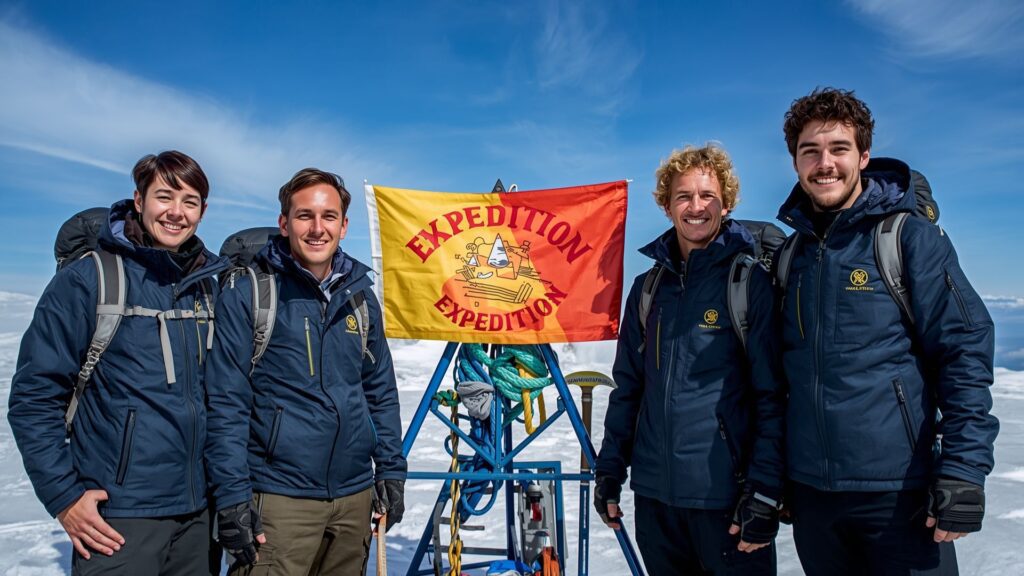
Pat Falvey launched the Beyond Endurance expedition in 2006 as a multi-year project designed to follow in the footsteps of Irish polar heroes. The expedition began with a group of 32 people aged 21 to 61 traversing South Georgia Island, the site of Shackleton’s legendary rescue mission. This initial phase prepared the team for the ultimate challenge while giving ordinary people the chance to experience Antarctic exploration firsthand.
The planning for the First Irish team to the South Pole required meticulous attention to every detail. Falvey selected three companions for the polar trek: Dr Clare O’Leary, who had become the first Irish woman to summit Mount Everest in 2004, and two relatively inexperienced polar trekkers, Shaun Menzies and Jonathan Bradshaw. This combination of experienced leadership with enthusiastic newcomers reflected Shackleton’s own philosophy of building diverse teams capable of extraordinary achievements.
Training included a traverse of the Greenland Ice Cap in August 2007, which Falvey described as crucial preparation for Antarctic conditions. The team tested equipment, refined techniques for hauling heavy sledges, and learned to navigate in white-out conditions. Each team member trained extensively in Ireland’s mountains, including regular hikes on Carrauntoohil, to build the physical endurance required for the Antarctic challenge.
The Journey: 1,100 Kilometres Across Antarctica
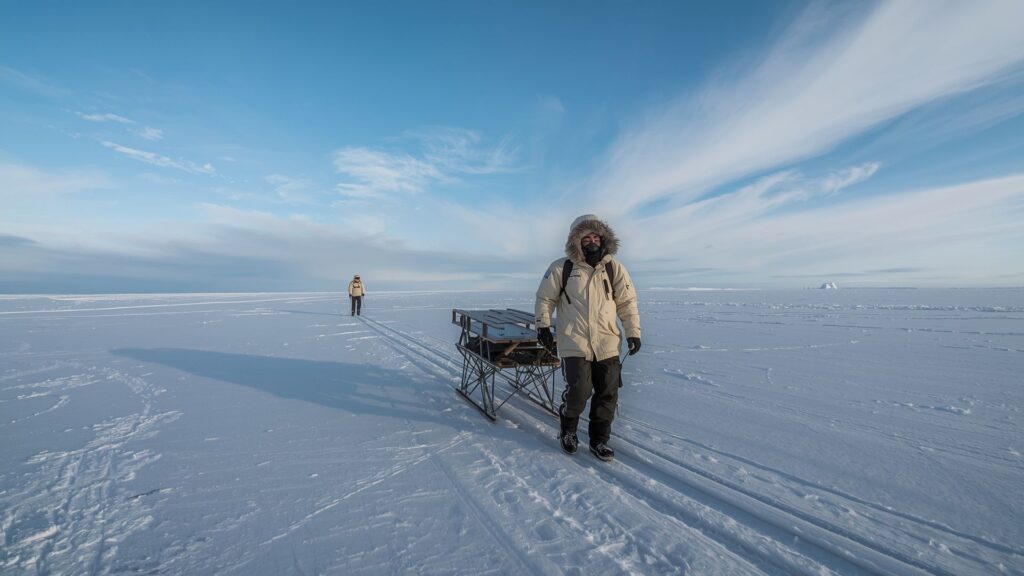
The First Irish team to the South Pole departed from Patriot Hills on 8 November 2007, beginning a 1,100-kilometre trek across the Antarctic ice shelf. Each team member hauled a sledge weighing more than 150 kilograms, loaded with food, fuel, camping equipment, and scientific instruments for studying climate change.
Pat Falvey, despite having climbed Everest twice and completed numerous extreme expeditions worldwide, described the Antarctic environment as the most challenging he had ever experienced. The team endured 14 consecutive days of complete white-out conditions where they could see nothing ahead and struggled to maintain direction. Temperatures regularly plummeted below -30 degrees Celsius, with wind chill making conditions even more severe.
Progress proved slower than planned due to the extreme weather. The First Irish team to the South Pole covered an average of 19 kilometres per day, significantly less than their target during the worst conditions. Icy winds battered the team constantly, and biting snowstorms forced them to remain in their tents for days at a time. The physical toll was immense, with each member experiencing extreme exhaustion, frostbite risks, and the psychological challenge of endless white landscapes.
Honouring Shackleton and Crean: The Irish Polar Legacy
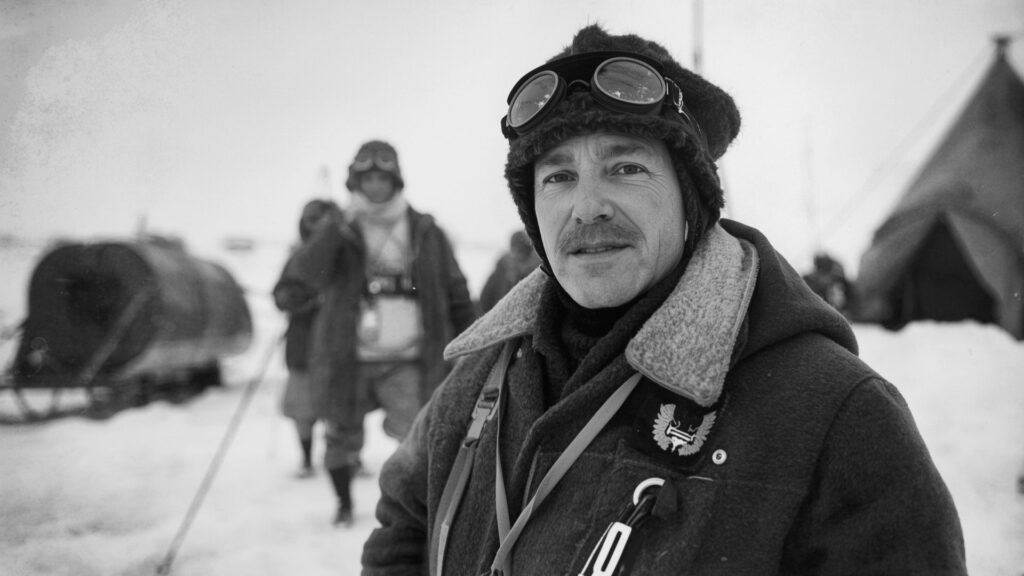
The First Irish team to the South Pole deliberately timed their expedition to honour the centenary of Ernest Shackleton’s 1908 Nimrod expedition. Shackleton, born in County Kildare, and Tom Crean from Annascaul, County Kerry, came within 180 kilometres of the South Pole on 9 January 1909 before being forced to turn back due to food shortages. Shackleton’s decision to prioritise his team’s survival over reaching the pole exemplified the leadership qualities that made him legendary.
Tom Crean participated in three major Antarctic expeditions between 1901 and 1916, including Robert Falcon Scott’s tragic Terra Nova expedition and Shackleton’s Endurance expedition. His feat of walking 56 kilometres alone across sea ice to save Edward Evans during the Terra Nova expedition earned him the Albert Medal for bravery. Crean later made the perilous 36-hour crossing of South Georgia Island with Shackleton and Frank Worsley, a journey that saved the entire Endurance crew stranded on Elephant Island.
The Beyond Endurance expedition explicitly sought to continue this tradition of Irish polar exploration. Dr Clare O’Leary became the first Irish woman to reach the South Pole, adding another milestone to Irish exploration history. Her achievement paralleled the groundbreaking accomplishments of earlier Irish explorers and inspired a new generation of women in adventure sports and polar exploration.
The Final Push to the Pole
The last week of the expedition brought both hope and extreme exhaustion for the First Irish team to the South Pole. As they closed in on their target, weather conditions improved slightly, raising spirits despite the team’s physical deterioration. Team members had lost significant body weight, their faces were weathered by constant exposure, and every muscle ached from the relentless effort.
On 8 January 2008, the team covered the final 23 kilometres to the pole. Pat Falvey described the moment of arrival as overwhelming, with all four team members experiencing a mixture of joy, relief, and disbelief. Standing at the geographic South Pole, where all meridians and longitudes converge, represented the culmination of years of planning, months of training, and nearly two months of the hardest physical challenge any of them had faced.
The First Irish team to the South Pole arrived with only one day’s food rations remaining, a stark reminder of how close they had come to running out of supplies. This echoed Shackleton’s own experience a century earlier when he chose to turn back rather than risk his team’s lives. The Amundsen-Scott South Pole Station staff welcomed the exhausted Irish team warmly, providing hot meals and shelter while they recovered.
Pat Falvey: Leader of the First Irish Team to the South Pole
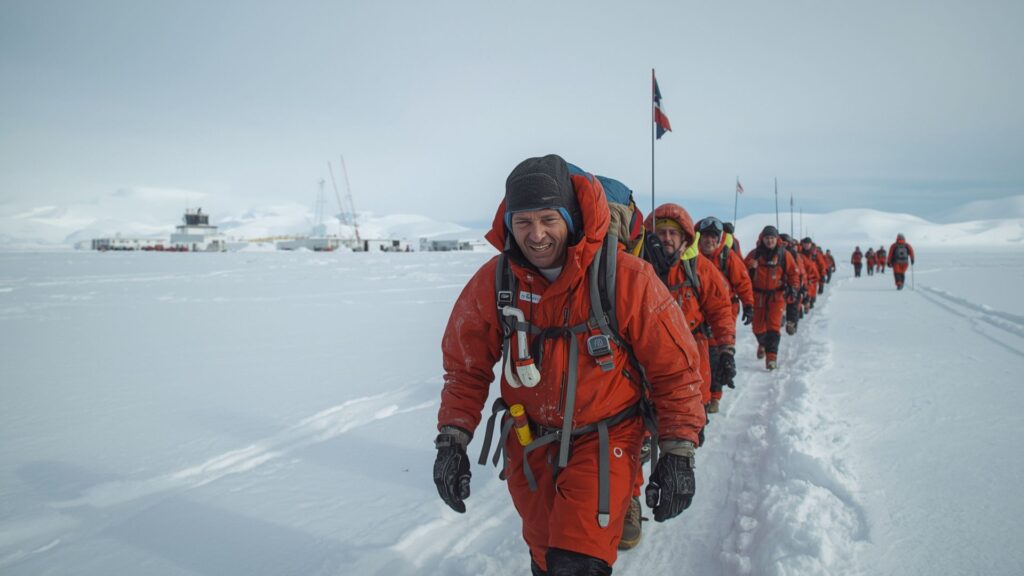
Pat Falvey brought extensive expedition experience to leading the First Irish team to the South Pole. Born in Cork city, he became the first person worldwide to complete the Seven Summits twice, climbing Mount Everest from both the Tibetan and Nepalese sides. His mountaineering career includes more than 65 expeditions to the world’s most challenging environments.
Falvey’s leadership philosophy emphasises team welfare above personal goals, directly influenced by Shackleton’s example. During the South Pole expedition, he made numerous decisions prioritising safety over speed, accepting slower progress to ensure all team members survived the journey. This approach reflects the lessons learned from studying polar exploration history.
Beyond exploration, Pat Falvey operates The Mountain Lodge in Beaufort, Kerry, providing a base for training expeditions and corporate team-building programmes. His work includes leading treks to Kilimanjaro, Everest Base Camp, and other international destinations. The experience gained from the South Pole expedition informs his approach to all adventures offered through Pat Falvey Irish & Worldwide Adventures.
Legacy and Impact on Irish Exploration
The achievement of the First Irish team to the South Pole reinforced Ireland’s proud tradition of polar exploration. The expedition demonstrated that Irish leadership, determination, and spirit continue to thrive in extreme environments. Pat Falvey later received the Shackleton Global Award in Monaco in April 2024, recognising his contributions to exploration and his role in honouring Irish polar heroes.
The Beyond Endurance expedition inspired numerous Irish people to attempt their own adventures. Schools across Ireland used the expedition as an educational tool, teaching students about geography, history, and human perseverance. The team’s success proved that with proper planning, training, and determination, extraordinary goals become achievable.
The First Irish team to the South Pole offers valuable lessons applicable beyond polar exploration. Teamwork proved essential, with each member supporting the others through the most challenging moments. Mental resilience mattered as much as physical strength. During the 14 days of white-out conditions, the team maintained morale through communication, shared goals, and refusing to surrender to despair.