
The Everest Base Camp trek itinerary takes trekkers through one of the world’s most spectacular mountain landscapes over 14 days. Pat Falvey Irish & Worldwide Adventures provides guided Everest Base Camp treks with professional mountain leaders who have completed over 65 Kilimanjaro summits and led 2,000+ climbers to high-altitude destinations since 1995. This Everest Base Camp trek itinerary covers the complete route from Kathmandu to base camp at 5,364 metres, including acclimatisation days and what trekkers experience at each stage.
Understanding the Everest Base Camp Trek Route
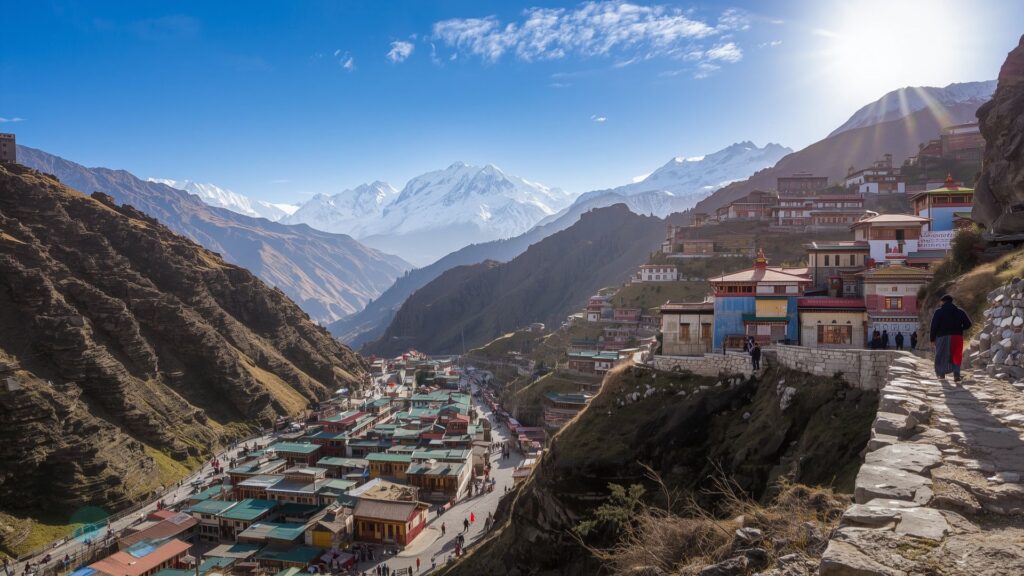
The trek to Everest Base Camp follows a carefully planned route through Nepal’s Khumbu region. Trekkers gain altitude gradually over 14 days, allowing proper acclimatisation to reduce altitude sickness risks. The journey begins in Kathmandu at 1,400 metres and ascends to Everest Base Camp at 5,364 metres before returning to Lukla.
The standard Everest Base Camp trek itinerary includes two dedicated acclimatisation days at Namche Bazaar (3,440 metres) and Pheriche (4,371 metres). During acclimatisation days, trekkers take short hikes to higher elevations before returning to sleep at lower altitudes. The route covers approximately 130 kilometres round trip, with daily walking times ranging from 3-7 hours depending on terrain and altitude.
Day-by-Day Everest Base Camp Trek Itinerary
The complete Everest Base Camp trek itinerary provides a structured progression through the Khumbu Valley with strategic rest days.
Day 1: Arrival in Kathmandu
Trekkers arrive at Tribhuvan International Airport in Kathmandu. Pat Falvey’s team provides airport transfers to the group hotel in Thamel. The first evening includes a welcome briefing where the trek leader explains the Everest Base Camp trek itinerary and conducts equipment checks. Kathmandu sits at 1,400 metres elevation.
Day 2: Kathmandu Preparation and Sightseeing
Day two provides time for final preparations before departing for the mountains. Trekkers visit Swayambhunath Stupa and Boudhanath Stupa, one of the largest Buddhist stupas in Nepal at 36 metres high. Equipment checks occur in the afternoon to verify proper boots, sleeping bags rated to -10°C, and essential items.
Day 3: Flight to Lukla and Trek to Phakding
The Everest Base Camp trek begins with a morning transfer to Ramechap Airport. The drive takes 4-5 hours through rural Nepal. From Ramechap, trekkers board a small aircraft for the 15-minute flight to Lukla at 2,860 metres. The first day’s trek descends gently to Phakding at 2,610 metres over 3-4 hours along the Dudh Koshi River.
Day 4: Phakding to Namche Bazaar
The trek from Phakding to Namche Bazaar covers 10-12 kilometres and takes 5-6 hours. Trekkers enter Sagarmatha National Park at Monjo. After crossing suspension bridges over the Dudh Koshi River, a steep ascent of 600 metres leads to Namche Bazaar at 3,440 metres. The town serves as the commercial hub for the Khumbu region with 1,600 residents.
Day 5: Acclimatisation Day in Namche Bazaar
The Everest Base Camp trek itinerary includes a rest day in Namche Bazaar for altitude acclimatisation. Trekkers take a morning hike to Everest View Hotel at 3,880 metres. The hike covers 5 kilometres return and takes 3-4 hours, following the principle of “climb high, sleep low.” The afternoon remains free for exploring Namche’s bakeries, gear shops, and the Sherpa Culture Museum.
Day 6: Namche Bazaar to Dingboche
The trek covers 12 kilometres over 5-6 hours, passing through Tengboche at 3,860 metres. Tengboche houses a Buddhist monastery established in 1916. The trail then descends before ascending to Dingboche at 4,410 metres. Dingboche sits in a wide valley with stone-walled fields where Sherpa farmers grow potatoes during summer months.
Day 7: Dingboche to Pheriche
The route from Dingboche to Pheriche covers 6 kilometres and takes 2-3 hours. This shorter day allows trekkers to adjust to altitudes above 4,000 metres. Pheriche sits at 4,371 metres and houses the Himalayan Rescue Association clinic, where two doctors staff the facility during trekking season.
Day 8: Acclimatisation Day in Pheriche
The second acclimatisation day takes place at Pheriche. Trekkers complete a short hike to Nangkartshang Peak at 5,083 metres, gaining 712 metres elevation before returning to sleep at 4,371 metres. The acclimatisation hike takes 4-5 hours return and provides views of Makalu, Lhotse, Nuptse, and Ama Dablam.
Day 9: Pheriche to Lobuche
The trek from Pheriche to Lobuche covers 8 kilometres over 4-5 hours, reaching 4,940 metres elevation. The trail passes through Dughla before climbing a steep moraine to reach memorials for climbers who died on Everest. Lobuche consists of basic teahouses with temperatures dropping below -10°C at night.
Day 10: Lobuche to Everest Base Camp and Return to Gorak Shep
Day 10 represents the primary goal of the Everest Base Camp trek itinerary. Trekkers first hike from Lobuche to Gorak Shep at 5,164 metres over 2-3 hours. The group then continues to Everest Base Camp at 5,364 metres. The route follows the Khumbu Glacier moraine over rocky terrain. Prayer flags mark the official base camp location. Total walking time reaches 6-8 hours.
Day 11: Sunrise at Kala Patthar and Descent to Pheriche
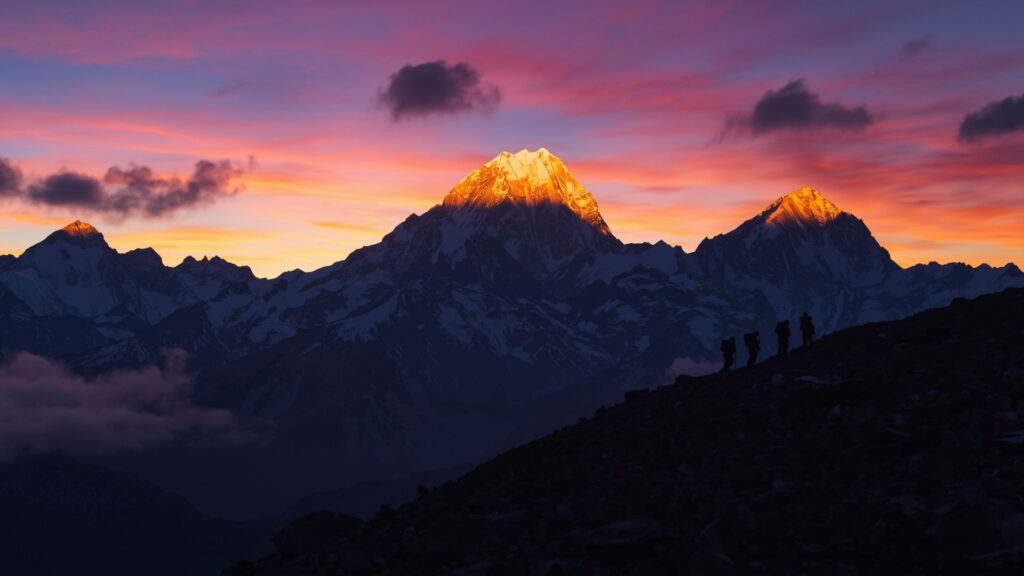
Trekkers climb Kala Patthar at 5,644 metres for sunrise views of Everest. The climb takes 2-3 hours from Gorak Shep. From Kala Patthar’s summit, trekkers see Everest (8,849 metres), Lhotse (8,516 metres), and Nuptse (7,861 metres). After sunrise, the group descends to Pheriche at 4,371 metres, covering 12 kilometres over 5-6 hours.
Day 12: Pheriche to Namche Bazaar
The return trek from Pheriche to Namche Bazaar covers 16 kilometres over 5-6 hours. Trekkers pass through rhododendron forests, which bloom with red flowers during March and April. The group arrives in Namche Bazaar by late afternoon.
Day 13: Namche Bazaar to Lukla
The final trekking day covers 18 kilometres from Namche Bazaar to Lukla over 6-7 hours. The trail descends through Sherpa villages and crosses multiple suspension bridges. The descent loses 1,250 metres elevation. The group gathers for a final evening celebration with the porter team.
Day 14: Flight to Kathmandu
Trekkers fly from Lukla back to Ramechap early morning. The return flight takes 15 minutes. After landing, the group transfers back to Kathmandu by vehicle. The final evening provides time for souvenir shopping in Thamel before international flights.
Physical Preparation for the Trek
The Everest Base Camp trek requires good cardiovascular fitness. Trekkers walk 5-7 hours daily whilst carrying day packs weighing 5-8 kilograms. Training should begin 12-16 weeks before departure with hill walking, cardiovascular exercise 4-5 times weekly, and practice hikes of 6-8 hours. Guided Carrauntoohil hikes through Kerry’s mountains provide excellent training terrain similar to Himalayan conditions.
Best Time for the Everest Base Camp Trek Itinerary
The optimal months for the Everest Base Camp trek itinerary are March through May and September through November. Spring offers stable weather and warming temperatures. Rhododendron forests bloom in April. Autumn provides the clearest skies of the year with daily temperatures at base camp ranging from -5°C to 10°C during daytime. Pat Falvey schedules Everest Base Camp treks during optimal spring and autumn windows.
Altitude Acclimatisation and Safety
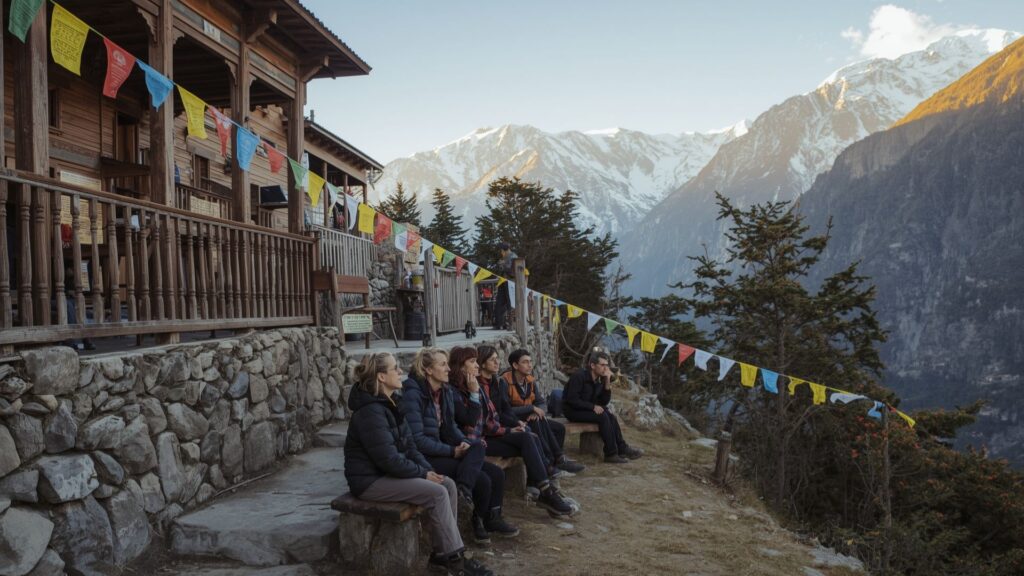
Altitude sickness occurs when ascending too quickly above 2,500 metres. Symptoms include headache, nausea, dizziness, and fatigue. The Everest Base Camp trek itinerary prevents altitude sickness through gradual ascent and acclimatisation days. The golden rule states “climb high, sleep low.” Hydration helps acclimatisation, with recommended fluid intake of 3-4 litres daily. Pat Falvey’s experienced guides monitor trekkers daily and recognise early altitude sickness warning signs.
What the Trek Includes
Pat Falvey has led trekking expeditions in the Himalayas for over 30 years. His team includes experienced Sherpa guides who grew up in the Everest region. Pat Falvey completed the Seven Summits twice, becoming the first person to achieve this feat by both the Bass and Messner lists. His expeditions include two Everest summits and multiple Kilimanjaro expeditions with over 65 successful summits.
Irish departures include return flights from Dublin, all trekking permits, experienced guides, teahouse accommodation, and porter services. Trekkers stay in family-run lodges throughout the route. Teahouses provide twin-share rooms with communal dining areas and basic facilities. The package allows trekkers to focus on the experience whilst logistics and accommodation bookings are handled professionally.
FAQs
The trek requires good fitness but no technical climbing skills. The main challenge comes from reduced oxygen levels at high altitude rather than terrain difficulty.
Beginners with good fitness levels can complete the trek. Pat Falvey recommends 12-16 weeks of preparation including hill walking and cardiovascular exercise.
Pat Falvey’s packages cost €3,200-€3,800 per person including return flights from Dublin, internal Nepal flights, accommodation, trekking permits, and guides. Additional costs include meals at teahouses (€25-35 daily) and travel insurance.
The Everest Base Camp trek itinerary includes buffer days to accommodate flight delays. Alternative options include helicopter transfers or road transfers to Jiri followed by extra trekking days.
Solo trekking to Everest Base Camp became illegal in Nepal from April 2023. All trekkers must hire a licensed guide through a registered trekking company.
Ncell and Nepal Telecom provide mobile coverage up to Namche Bazaar with decreasing reliability higher up. Teahouses offer WiFi internet for €3-5 daily. Pat Falvey’s guides carry satellite communication devices for emergencies.